The Businesses We Never Learn to See: How Scientist Alyssa Mouton Found Ownership in a Laundromat and Federal Contracts
Many professionals spend years developing expertise within an industry without ever considering that their most valuable career opportunity might exist entirely outside it. They understand how to advance within an organization, strengthen their technical skills, and build a successful career, but the possibility of acquiring an established company or selling services to a major institutional buyer may never enter the conversation.
That is not necessarily a failure of ambition or entrepreneurial instinct. It is often a problem of access to information. Business opportunities can exist in plain sight while remaining effectively invisible to people who have never been introduced to the markets, financing structures, or purchasing systems that make them possible.
For women considering business ownership, this distinction matters because the traditional entrepreneurial narrative tends to focus on starting something from nothing. Far less attention is given to acquiring an existing operation, improving its economics, and identifying customers that its previous owners never pursued.
Alyssa Mouton's experience brings those overlooked opportunities into focus.
Before becoming a laundromat owner and federal government contractor, Alyssa spent a decade working as an analytical chemist in Louisiana's oil and gas industry. With a biology degree and chemistry minor from Xavier University of Louisiana, she had followed a recognizable professional path and expected to continue advancing in science until retirement.
Becoming a mother changed how she evaluated that future. She still valued meaningful work and financial stability, but she also wanted greater control over her time and the ability to be present for her son without negotiating those responsibilities around an employer's expectations.
What followed was not a conventional startup story. Alyssa began researching unfamiliar business opportunities, eventually acquired an operating laundromat through an unsolicited letter, negotiated seller financing, and expanded the business into commercial laundry services and federal government contracting.
Her experience raises a more useful question than whether someone has the personality to become an entrepreneur: How many capable professionals remain outside business ownership because they have never been shown where the opportunities exist?
The First Barrier to Business Ownership Is Often Knowing What Is Available
Alyssa did not leave analytical chemistry with a fully developed business plan or a lifelong ambition to operate laundromats. Her search began with federal government contracting, where she learned about opportunities to coordinate work between government buyers and businesses capable of delivering the required services.
Her initial interest was a model in which she could identify contract opportunities, establish relationships with vendors, and participate in fulfilling government purchasing requirements. She was learning how federal procurement worked before she owned a company capable of providing the services herself.
At the same time, she wanted something more tangible, preferably an existing business with a physical location and enough operational stability to function while she continued working in her scientific career.
Laundromats appealed to her because they provided an established service with continuing customer demand and the possibility of expanding beyond the existing self-service model. She was not purchasing an exciting new idea. She was considering an operating asset with equipment, customers, infrastructure, and room to improve how that infrastructure generated revenue.
The distinction is important because an acquisition allows someone to enter entrepreneurship through a different set of decisions than those associated with launching a company from the ground up.
Instead of proving that customers want an entirely new product, the prospective owner must determine whether the existing business is financially sound, whether its equipment and customer relationships have value, and whether opportunities for improvement justify the purchase price and additional investment.
For a professional transitioning from a technical career, this approach can create a more understandable entry point into ownership, although it does not eliminate financial risk or the need to develop unfamiliar operational skills.
Alyssa's scientific background is particularly relevant here. Analytical chemistry demands attention to evidence, measurement, and the difference between what appears to be true and what the data actually support. Her approach to evaluating laundromats reflected a similar concern with understanding the underlying numbers before committing capital.
There is also a broader economic question embedded in her story. If more professionals understood the mechanics of acquiring established companies, using seller financing, or pursuing government customers, would business ownership become a realistic option for people who currently assume entrepreneurship requires a novel idea and substantial startup funding?
The opportunities Alyssa eventually pursued were not newly created markets. They were established markets that she had never been exposed to during her professional career.
Buying an Existing Business Requires More Than Finding One for Sale
Alyssa initially searched online for laundromats that were already listed for sale, visited potential acquisitions, and evaluated whether the available businesses met her requirements. She became dissatisfied with what she was finding and concluded that a better opportunity might come from approaching owners who had not yet decided to sell.
Rather than waiting for another listing, she mailed letters to more than 20 laundromat owners in her area, asking whether they might consider selling their businesses.
One response came from an owner whose laundromat was approximately ten minutes from her home. The facility had strong customer reviews, functioning equipment, and the operational stability Alyssa needed because she was still employed full time.
The timing was unusually favorable. The seller and his wife were preparing for a demanding period of political activity, and although selling the laundromat had not been their original plan, Alyssa's inquiry presented an option they were willing to consider.
The resulting transaction also introduced a financing structure that can be particularly important for first-time buyers. Although Alyssa had prepared to seek a commercial business loan, the owner offered seller financing, allowing her to make a down payment and repay the balance under an agreed arrangement that included interest.
This did not make the acquisition inexpensive or eliminate the financial obligations associated with purchasing the business. It changed how the purchase could be financed and created an opportunity for Alyssa to negotiate directly with someone who understood the operation.
The seller later became one of her business mentors, illustrating another potential benefit of an acquisition process built around direct communication rather than an exclusively transactional relationship.
Yet the most consequential part of her purchase was not the letter or the financing. It was her willingness to examine whether the business could support the economics of ownership.
During the podcast conversation, Alyssa describes reviewing tax returns, bank statements, deposits, utility consumption, and equipment utilization, including the number of times each machine was used daily.
Those details mattered because a laundromat's apparent revenue tells only part of its financial story. Water and electricity are operating necessities, commercial laundry equipment requires substantial maintenance and eventual replacement, and a leased facility creates recurring obligations that continue regardless of customer demand.
Alyssa also understood that the existing self-service operation was approximately a break-even business once rent was considered. That meant the acquisition could not be evaluated solely on its current earnings. Its value to her depended partly on whether she could successfully introduce additional services and generate more revenue from the infrastructure she was purchasing.
During the interview, the discussion also addresses a problem that frequently affects first-time buyers: debt service may not appear as an expense in the seller's historical financial statements, even though it becomes a significant obligation for the buyer.
A company can report positive operating income while generating insufficient cash to cover acquisition financing, future equipment expenditures, and reasonable compensation for its new owner.
Alyssa's experience demonstrates why the purchase price, financing terms, existing operating costs, and credible opportunities for expansion must be considered together rather than treated as separate decisions.
“Keep in mind that everything that you do in business is a risk. With that being said, you need to do your due diligence, you need to do your research.”
That observation is especially important for professionals who are attracted to buying an established business because it appears less uncertain than starting one. Existing customers and historical financial records provide information that a new startup may not have, but they do not guarantee that the business will remain profitable under different ownership.
The value of due diligence is not that it removes uncertainty. It makes the risks more visible before they become the buyer's responsibility.
An Overlooked Customer Can Change the Economics of an Ordinary Business
After acquiring the laundromat, Alyssa did not limit her ambitions to increasing the number of people using its self-service machines.
The operation already had a physical location, commercial equipment, utilities, and an existing customer base. By introducing wash-and-fold services, pickup and delivery, dry cleaning, and additional commercial capabilities, she could expand the ways customers purchased laundry services without immediately acquiring another facility.
The business eventually expanded into an adjacent space that supported some of those additional operations.
This distinction between increasing customer volume and expanding the ways existing assets can generate revenue is significant. A company does not necessarily need another location to create another source of income. Sometimes the more important opportunity is identifying a different buyer for capabilities the business already possesses.
That became particularly relevant when Alyssa connected her original interest in government contracting with her newly acquired laundromat.
While reviewing opportunities through SAM.gov, the federal government's procurement platform, she discovered a laundry requirement associated with a military base.
Until that moment, she had been thinking about government contracting primarily as a way to connect buyers and vendors. She had not fully considered that the laundromat she owned could become the service provider.
The realization changed the possibilities available to her business.
Government agencies purchase a broad range of services from private companies, including services that may appear ordinary in commercial markets. The important question for a small business owner is whether the company can meet the requirements, demonstrate its capabilities, manage contract performance, and submit pricing that makes financial sense.
Alyssa also explains how small business procurement programs can create opportunities for qualified companies that might otherwise struggle to compete against much larger organizations.
She holds a Women-Owned Small Business certification and discusses how eligible set-aside opportunities can limit competition to businesses meeting specific program requirements. Certification does not guarantee a contract, but it can allow a qualifying company to compete for opportunities that are not open to every potential bidder.
For entrepreneurs unfamiliar with federal procurement, the process can appear inaccessible because it introduces a different vocabulary, registration requirements, proposal structures, and expectations surrounding past performance.
Alyssa challenges the assumption that a business must already have federal contracts to demonstrate relevant experience. Commercial customer relationships, as well as qualifying state or local government projects, can provide evidence of the company's ability to deliver services, depending on the requirements of the specific solicitation.
The more consequential challenge comes after identifying an opportunity. Winning a contract is only beneficial if the business can perform the work at a price that supports its costs and financial obligations.
Government contracts may extend across multiple years, making the initial pricing decision particularly important. Labor, equipment capacity, maintenance, transportation, subcontractor performance, and other operating expenses must all be understood before the business commits to delivering services over an extended period.
For an operation such as Alyssa's, that means the opportunity to increase contracted revenue must be evaluated against the physical capacity and reliability of the machines and people responsible for completing the work.
What makes her approach distinctive is not simply that she discovered federal government contracting. It is that she connected a customer market she had been studying with an operating business that already possessed some of the capabilities that market required.
That experience has since become part of her work educating other owners through Alyssa Mouton Brand and her Laundromat Launchpad government contracting program.
For founders in other industries, the principle extends well beyond laundry services. A company that serves individual consumers may also have capabilities valuable to institutions, commercial accounts, or public sector buyers. The strategic opportunity lies in understanding which additional markets the existing business can serve profitably, rather than assuming growth must come from selling more of the same service to the same customer.
Ownership Creates Freedom Only When the Business Can Operate Without Constant Intervention
One of the most persistent misconceptions surrounding laundromat ownership is that the business produces passive income simply because customers operate the machines themselves.
Alyssa rejects that characterization.
“Nothing in life is passive. I don't even know why the word passive exists in business, because nothing is passive.”
Her objection is grounded in the practical realities of running a facility where equipment can fail, customers expect reliable service, employees need direction, and new revenue opportunities require active development.
Commercial laundry machines can represent a major capital investment, and maintaining aging equipment becomes an important part of the operating strategy. Alyssa emphasizes the value of identifying reliable maintenance support and understanding how to keep existing machines functioning before committing to expensive replacements.
The same discipline applies to staffing and financial controls.
Her laundromat employs trusted members of her extended family, with defined responsibilities for daily operations, customer services, and government contract fulfillment. At the same time, Alyssa and her fiancé retain responsibility for the financial side of the business, preserving a distinction between operational trust and financial oversight.
This separation matters because familiarity does not replace internal controls. Even when employees are relatives or longtime associates, the business still needs clear responsibilities, reliable procedures, and appropriate accountability.
For Alyssa, building those systems has also been essential to achieving the personal objective that originally motivated her transition out of science.
She can visit the laundromat, oversee operations, and respond to business needs while having enough flexibility to pick up her son from school or care for him when he is sick. The company still requires substantial effort, and she acknowledges that entrepreneurship can sometimes involve more working hours than her former job.
The difference is that those hours are organized around the requirements of the business and the priorities of her family rather than a fixed corporate schedule.
“I don't hone in on the forty hours a week. I just do what has to be done to get the work done.”
That distinction exposes an important tension for founders who pursue ownership primarily to gain control over their time.
A business does not automatically create freedom because its owner no longer reports to an employer. Without dependable processes, sufficient margins, appropriate staffing, and a realistic understanding of capacity, the owner may simply exchange one demanding schedule for another with fewer boundaries.
Alyssa's current growth objective reflects that awareness. Rather than immediately pursuing additional laundromats, she wants to increase the utilization of her existing operation so that the machines can generate revenue across more hours of the day, including through commercial or government contract work outside normal public operating hours.
The decision to maximize existing capacity before acquiring another location is an important departure from the assumption that business growth should always be measured by physical expansion.
A second facility would introduce additional equipment, rent, staffing, maintenance, and management requirements. Increasing productive utilization within an existing facility may create a different economic result, provided the additional revenue more than covers the costs associated with delivering it.
The strategic question is therefore not how quickly Alyssa can acquire another laundromat, but how effectively she can improve the economics and reliability of the business she already owns.
What Alyssa Mouton's Experience Reveals About Building a Business
Alyssa's transition from analytical chemistry to laundromat ownership reveals three connected dimensions of entrepreneurship that are often discussed independently.
The first is access to information. Before someone can evaluate an opportunity, she needs to know that it exists and understand the mechanisms through which people participate in that market. Acquiring an established laundromat through direct outreach and pursuing federal contracts are both examples of opportunities that may remain invisible to professionals who have never encountered those business models.
The second is financial discipline. Discovering an opportunity does not make it economically attractive, and the ability to obtain financing does not establish that a purchase is sound. A serious buyer must evaluate existing performance, financing obligations, future investment requirements, and the operating changes needed to produce a reasonable financial return.
The third is operational capability. A business becomes more valuable when its assets, people, and processes can reliably serve customers without every decision depending on the owner. Additional revenue is meaningful only when the organization can deliver the work profitably and consistently.
These principles reinforce one another.
Access without analysis can lead to an expensive mistake. Financial opportunity without operating capacity can create obligations a company cannot fulfill. And a business with strong assets but limited knowledge of potential customers may leave substantial opportunities unexplored.
Alyssa's story is compelling precisely because she did not begin with a conventional entrepreneurial background or a sophisticated acquisition strategy. She began with a different understanding of what she wanted from her career, researched opportunities outside her professional experience, and gradually learned how to turn an operating asset into a business serving multiple customer markets.
Her experience does not suggest that every scientist should buy a laundromat or that government contracting is an easy route to predictable income. It suggests that the range of businesses someone can own may be considerably wider than the career possibilities she has previously been taught to consider.
That is a meaningful distinction for experienced women contemplating a transition into ownership, as well as established founders who may be looking for new customers or better ways to use the resources they already control.
About Alyssa Mouton
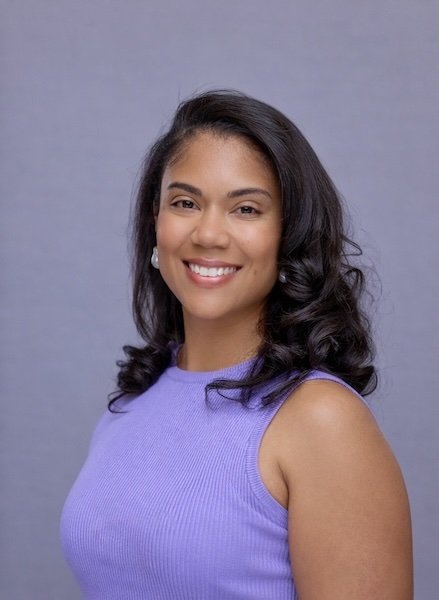
Alyssa Mouton is a Louisiana-based entrepreneur, former analytical chemist, laundromat owner, federal government contractor, and business educator. Through Alyssa Mouton Brand, she helps prospective and established owners understand laundromat acquisitions, business operations, and opportunities in government contracting.
Readers interested in her work can explore her business education and consulting resources, learn about her federal contracting course for laundry operators, or connect with her on LinkedIn, Instagram, TikTok, and Facebook.
Continue the Conversation
In her full conversation with Aggie Chydzinski and Cristy O'Connor on the Badass Women in Business Podcast, Alyssa discusses the details of purchasing her first laundromat, negotiating with its previous owner, identifying federal contract opportunities, managing equipment and employees, and redefining the relationship between business ownership and family life.
Her experience offers a useful challenge to professionals and founders alike: before assuming the next opportunity requires starting something new, consider whether an established business, an overlooked customer, or an unfamiliar market might already offer the foundation for what you want to build.
Join the ongoing conversation through the proveHER Blogcast, where we examine the decisions, economics, and realities behind building companies and creating ownership.
What business opportunity might you be overlooking simply because no one in your professional world has ever introduced you to it?