Building the Business of Caregiving: Nicole àBeckett on AI, Trust, and the Overlooked Economy of Care
Every generation inherits a business problem it has been trained to treat as a private burden. For millions of families, that problem is caregiving, a role so emotionally familiar and operationally complex that it often disappears in plain sight. It is performed in kitchens, hospital rooms, text threads, parking lots, and late night Google searches, yet it rarely receives the strategic attention given to other systems that hold our economy together.
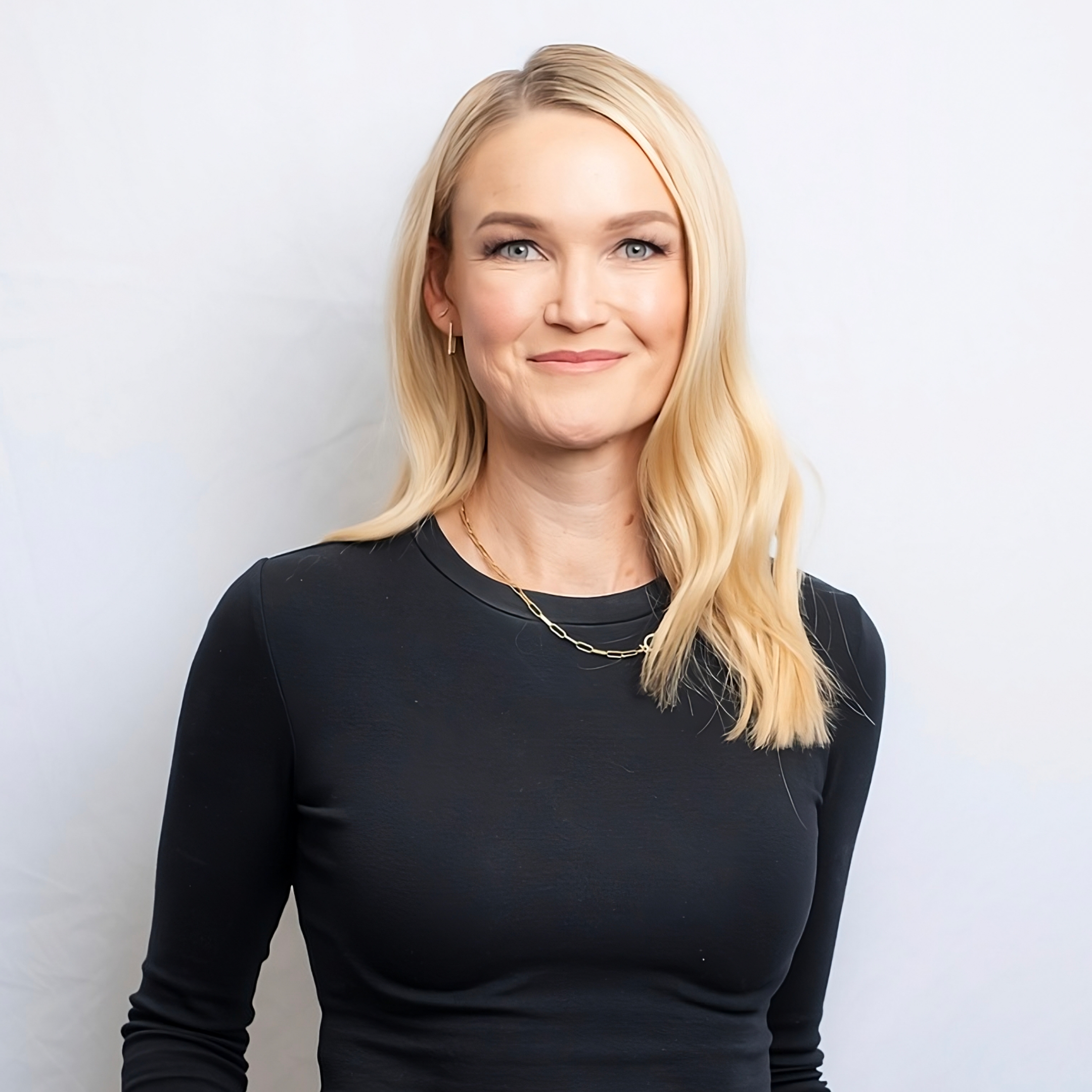
That invisibility is precisely what makes Nicole àBeckett’s work so important. As the Founder and CEO of HeroGeneration, an AI powered platform built to support family caregivers, Nicole is not simply creating another technology product for a crowded healthcare marketplace. She is naming a structural gap that has shaped families, workplaces, and women’s economic lives for decades, then building a company around the idea that care should not depend on one exhausted person becoming the operating system for everyone else.
Her story begins where many category defining companies begin, not with a market map, but with a lived problem that would not let go. Nicole had spent more than 20 years in startups and technology, including experience on the venture side and inside portfolio companies, so she understood product, growth, uncertainty, and the difficult discipline required to build from zero. But when her father’s cancer progressed, and later when her mother’s chronic lung disease required more intense support, she found herself in a world where the tools that organized her professional life had no equivalent in one of the most consequential experiences of her personal life.
She was attending specialist appointments, tracking medications, navigating hospice and palliative care questions, managing family communication, and raising young children at the same time. The work was emotional, clinical, administrative, logistical, and relentless. It was also, as she discovered, remarkably unsupported.
“I felt like I was in a washing machine, just getting tumbled around, tumbled around, just trying to grab a hold of whatever I could.”
That image matters because it captures something most traditional business language fails to describe. Caregiving is not merely a set of tasks. It is a cognitive load, a decision architecture, a communication system, and an emotional endurance test, all placed on people who often receive no training, no centralized support, and no clear path through the complexity.
The Market Hidden Inside the Family System
The caregiving economy has long been underestimated because so much of its labor has been absorbed by families, and especially by women, without being fully counted as work. In Nicole’s telling, this is not incidental. It is part of why the problem remained underbuilt in technology for so long. The people most affected were not always the people receiving capital, shaping product roadmaps, or deciding which problems deserved scalable solutions.
Nicole makes the point plainly: women have historically been the primary caregivers, while the technology industry has historically been led and funded by people who were less likely to experience caregiving as a daily operational burden. That disconnect matters because innovation often follows proximity. When the people with power are far away from the pain, entire markets can remain invisible until someone with lived experience and strategic discipline forces the issue into view.
HeroGeneration is therefore more than a convenience tool. It is a response to a market failure, one created by the assumption that families will simply absorb complexity indefinitely. In reality, caregiving often collides with work, parenting, income, health, marriage, sibling dynamics, and long term financial security. It affects attendance, performance, retention, mental health, and earning power, particularly for women who are often in the prime of their professional lives when caregiving responsibilities intensify.
Nicole’s insight is that caregiving is not only a healthcare issue. It is a workplace issue, a family infrastructure issue, and a leadership issue. When an employee is trying to manage a parent’s discharge plan, a child’s medical records, a spouse’s appointments, or a loved one’s medication list, that person is not leaving the problem at home. They are carrying it into every meeting, every deadline, and every decision.
For executives, this reframes caregiving from an individual accommodation into an organizational design challenge. The question is no longer whether caregiving affects business performance. The question is whether companies are willing to build systems that acknowledge reality before burnout, absenteeism, or attrition make the cost impossible to ignore.
AI as a Second Brain, Not a Substitute for Humanity
One of the most compelling aspects of Nicole’s approach is that she does not position AI as a cold replacement for human care. Instead, she describes HeroGeneration as a second brain, a support layer that can hold information, recognize context, suggest next steps, and reduce the number of details one person has to carry alone.
This distinction is critical. In emotionally sensitive categories, AI becomes valuable only when it creates more room for humanity, not less. Nicole’s examples are striking because they are not about futuristic medical breakthroughs or impersonal automation. They are about the small, often forgotten gestures that preserve dignity and connection.
She describes entering details about her mother into a simulation of the platform, including the fact that her mother loved trivia and watched Jeopardy every night. The system suggested setting up a trivia time with a family member, something simple, personal, and deeply human. Nicole became emotional recounting it because the recommendation surfaced something she would have loved to do, yet could not access in the chaos of caregiving.
That is the real promise of well designed AI in this space. It does not need to replace judgment, love, or family presence. It needs to reduce friction so those things can happen more often.
“AI can take away a lot of the things that you have to do manually just to open up that space in your mind, you know, in your heart.”
For founders building in AI, Nicole’s work offers a more mature model than the standard technology narrative. The question is not simply, “What can AI do?” The better question is, “What human capacity can AI protect?” In caregiving, that capacity may be patience, memory, presence, or the ability to see a loved one as a whole person rather than a list of urgent tasks.
This is also where trust becomes central. Nicole understands that families navigating illness, disability, aging, or crisis are not casual users. They are vulnerable, overwhelmed, and often skeptical of anything that feels like one more system to manage. For HeroGeneration to work, the product cannot simply be clever. It has to be careful. It has to reduce stress rather than add to it. It has to earn confidence through usefulness, privacy, and emotional intelligence.
From Personal Pain to Product Discipline
Many founders build from personal experience, but not all personal experiences become scalable businesses. Nicole is clear eyed about this distinction. She and her cofounder, Dr. Shruti Roy, both came to the caregiving problem through lived experience, yet Nicole understands that her family’s story cannot be the only blueprint. Her father’s cancer, her mother’s lung disease, and her own experience as a mother in the sandwich generation gave her urgency, but customer discovery must provide discipline.
That is one of the most important lessons in the episode. Founders who build from pain often face a subtle strategic risk: they can confuse resonance with validation. A story may move people, and a problem may be real, but the business still has to understand different users, different care situations, different channels, and different moments of need.
Nicole names this directly when she explains that dementia caregivers, parents of children with special needs, spouses managing acute illness, and adult children supporting aging parents may all need support, but not always in the same way. HeroGeneration must be flexible enough to serve many care scenarios while still communicating value in a way that feels specific to each family’s reality.
That is harder than building a narrow point solution. It requires product discipline, user feedback, partnerships, testing, and restraint. Nicole contrasts this experience with her previous venture, where speed and iteration were more straightforward. With caregiving, a poorly designed product does not merely fail to delight a user. It can add burden to someone already overwhelmed.
This is the kind of leadership nuance that rarely appears in glamorous startup stories. The founder’s job is not only to move fast, but to understand when speed can become irresponsible. In a sensitive market, trust is not a feature added later. It is part of the product itself.
Asking for Help as a Systems Problem
One of the most resonant themes in Nicole’s conversation is the phrase almost every caregiver hears: “Let me know how I can help.” It is generous, well intended, and often insufficient.
Nicole explains why. When someone is already overwhelmed, asking them to identify, assign, explain, and coordinate help can become another task. The offer may be sincere, but the burden of operationalizing that support still falls on the primary caregiver. This is where HeroGeneration’s care circle concept becomes powerful. By making tasks visible, assignable, and eventually auto assigned based on availability and proximity, the platform attempts to turn vague goodwill into actual relief.
This insight extends beyond caregiving. In organizations, families, and leadership teams, support often fails not because people are unwilling, but because the system for converting willingness into action is weak. Leaders ask for help, employees offer help, families promise help, yet the person closest to the burden continues carrying the mental load because no structure exists to distribute it.
Nicole’s perspective reframes asking for help not as a personal weakness, but as a design challenge. Better systems lower the emotional cost of delegation. They also give others a clearer way to participate.
“People want to help. They say, how can I help? Because they want to feel part of this journey.”
That idea is deceptively simple and deeply important. When caregivers refuse help because they do not want to burden others, they may unintentionally deny family and friends the chance to contribute meaningfully. Support, when structured well, is not only relief for the person carrying the load. It is connection for the people who want to show up.
The Leadership Lesson: Keep Going When the Problem Is Bigger Than You
By the end of the conversation, Nicole returns to the emotional reality of building a company around an enormous problem. There are days when the market feels too big, the path too complicated, and the boulder too heavy. What has changed for her in this chapter of leadership is not that uncertainty has disappeared. It is that she has become more committed to continuing through it.
This is where her experience as a repeat entrepreneur becomes essential. First time founders often interpret resistance as a sign that something is wrong. Experienced founders learn that resistance is part of the terrain, especially when building in a category that requires education, behavior change, partnerships, and trust.
Nicole does not romanticize this. She admits there are days when the problem feels too large to take on. But she also understands that big change often advances through small wins, one pilot, one conversation, one user insight, one partner, one improved feature at a time.
For modern founders and executives, this may be the most transferable lesson from HeroGeneration. Strategic resilience is not blind persistence. It is the discipline of continuing while listening, refining, testing, and staying close enough to the problem that the mission remains real without becoming self indulgent.
The caregiving economy will not be solved by sentiment alone, and it will not be solved by technology that ignores the emotional architecture of family life. It will require founders who can translate lived experience into market insight, design products that honor human complexity, and persuade employers, healthcare systems, and families to treat care as infrastructure rather than improvisation.
Nicole àBeckett is building from that conviction. Her work asks leaders to see what has been hidden in plain sight: that behind every employee, patient, parent, spouse, and child is often a caregiver holding together a system no one designed for them. The opportunity, and the obligation, is to build better.
For founders, the challenge is to separate personal pain from scalable need without losing the moral clarity that made the work matter in the first place. For executives, the challenge is to recognize caregiving as a business issue before it becomes a workforce crisis. For leaders in every sector, the lesson is that innovation does not always begin with a new technology. Sometimes it begins with the courage to look at an old burden and finally ask why one person was expected to carry it alone.
To hear Nicole àBeckett’s full conversation on caregiving, AI, entrepreneurship, and the leadership discipline required to build in an overlooked market, listen to the full episode of the Badass Women in Business Podcast.