Hon. Leela Sharon Aheer: Activating Your Voice, One Step at a Time
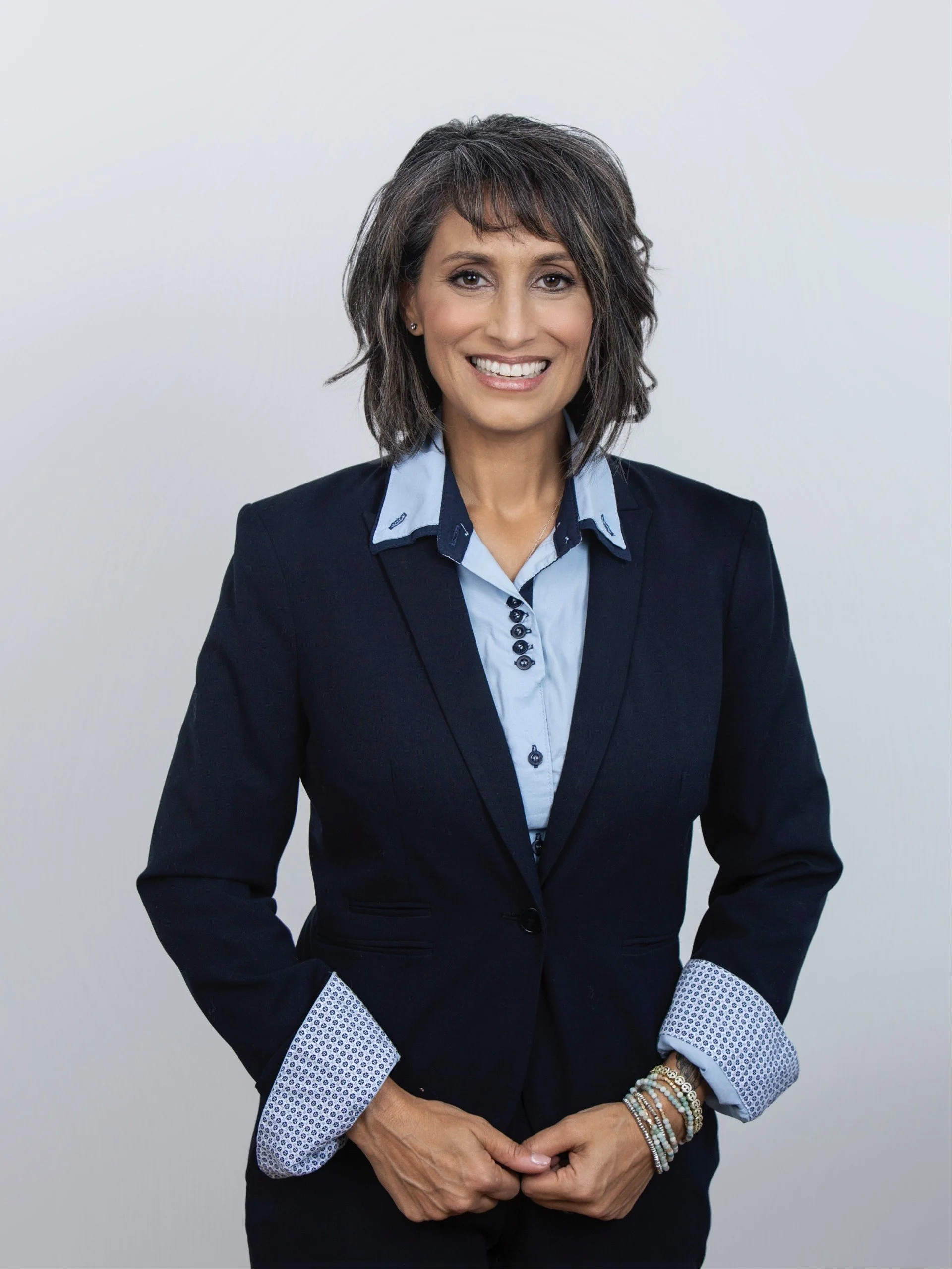
Leela Sharon Aheer’s story does not start with politics. It starts with voice.
Before there were campaigns, legislation, or global strategy meetings, there was music, conversation, and a family that did not fit neatly into its surroundings. Leela was raised in Alberta as the daughter of an Indian immigrant father and a Canadian mother at a time when that alone made her visible. Not celebrated. Not erased. Visible.
That visibility shaped everything that came next.
A Family Built on Curiosity, Not Comfort
Leela’s father arrived in Canada from India in 1962 to study engineering. He met her mother in a choir in Edmonton during his first prairie winter, a detail that sounds almost too symbolic to be real. A brown skinned immigrant engineer. A red haired Canadian woman with Irish, English, and Scandinavian roots. Music as the meeting point.
Their marriage created a household where culture was not something you inherited passively. It was something you practiced. Leela often says her mother knew Indian culture more deeply than her father. That was not accidental. Her mother chose it, learned it, and honored it.
From an early age, Leela learned that belonging is built through effort and respect, not proximity or bloodline. That lesson would quietly guide her through every leadership role she would later hold.
Growing Up Where Everyone Knows Your Name
Leela grew up in rural Chestermere, Alberta, in a farming community where anonymity did not exist. Everyone knew everyone. Babysitting meant walking long distances to neighbors’ homes. Volunteerism was not optional. It was the price of belonging.
Accountability was constant. You could not disappear. You could not pretend. Your actions followed you.
Her home was full of musicians, engineers, intellectuals, and community members who believed young people deserved real conversation. Leela was not sheltered from complexity. She was invited into it. Global events, cultural tension, politics, and values were discussed openly at the kitchen table.
Leadership was modeled long before it was named.
The Moment That Could Have Silenced Her
At fifteen, Leela wandered into a rally in the parking lot of a newly opened mall in Calgary. Curious, unafraid, and used to asking questions, she approached and asked what it was about.
The response was not debate. It was hatred.
A man told her she was an abomination. That her existence had destroyed the Christian white bloodline. That she did not belong.
Soon after, materials from the Aryan Nations arrived at her family’s home, outlining white supremacist ideology and reinforcing the same message. You should not exist.
This is often the point in a story where someone learns to shrink.
Leela did the opposite.
Choosing Activation Over Silence
She showed the materials to her father, who responded with calm shaped by his own experience as an immigrant who deeply loved Canada. She then brought them to her high school principal and asked a simple question. What do I do?
His answer was not performative or dramatic. Speak. Educate. Start a conversation.
Leela organized a lunchtime discussion for students to talk about racism, identity, and belonging. The language was imperfect. The framework was unpolished. The courage was undeniable.
That moment set a pattern.
When confronted with harm, confusion, or injustice, Leela does not retreat. She activates.
Community as Leadership Training
The response from her school and community reinforced something she already understood intuitively. Change does not require permission. It requires participation.
In Chestermere, leadership without relationship failed quickly. People remembered how you showed up. They remembered if you listened. They remembered if you stayed.
She was surrounded by women, particularly in farming families, who did not dilute their competence. They managed finances, labor, households, and crises without applause. Strength was not aesthetic. It was functional.
That grounded her understanding of leadership in reality, not rhetoric.
When Ideology Fell Short
Leela entered university studying political science, believing it was the most direct path to change. Instead, she encountered rigid ideology and polarization that left little room for lived experience.
This was a time of global conflict, military deployment, and heated debate. She watched discussions flatten complex realities into sides. She saw service members dismissed without nuance. She felt the gap between theory and humanity widen.
She did not leave because she stopped caring.
She left because the conversation had stopped being useful.
Finding Her Voice Through Music
Leela turned to music, something that had always been part of her life. Music became a way to process complexity, express frustration, and connect across difference.
She taught. She performed. She volunteered. She stayed embedded in community life, working with families and children, earning trust the slow way.
Without calling it leadership, she was practicing it.
Listening. Translating. Showing up consistently.
Entering Politics Without Certainty
When Leela was asked to run for office, it felt ironic. Politics was the space she had left.
She entered with imposter syndrome and a deep respect for the weight of representation. She ran against someone she knew personally, someone whose children she had taught, someone she had previously supported.
In small communities, elections are not abstract. They fracture relationships.
She won by 260 votes.
That margin mattered. It made leadership personal. It made repair essential.
Governing With Nuance
As a legislator and later as Alberta’s Minister of Culture, Multiculturalism, and Status of Women, Leela held a clear line.
In the country where she could legislate, the rights of women, girls, and vulnerable people were non negotiable.
She practiced servant leadership. That meant listening to people she disagreed with. Serving communities that did not vote for her. Legislating for futures she might never benefit from.
She believed better policy came from nuance, not purity.
Women, Power, and the Word “Just”
Leela speaks directly about how women are conditioned to shrink.
The word “just” before titles. The expectation to be polite, grateful, quiet. The unspoken rule that ambition must be softened to be acceptable.
She also names the harder truth. Women often enforce these limits on each other.
Scarcity thinking convinces women there is not enough room, enough credit, or enough power to go around. That belief is corrosive.
Women are not a minority. They are over half the population. Their lens is not optional. It is essential.
Momentum, Not Martyrdom
One of the most grounding parts of Leela’s story comes from her family life.
She shares openly about her husband’s recovery from alcoholism and the daily work it required. Recovery was not dramatic. It was practiced. It demanded redefining identity, relationships, and responsibility.
That experience reshaped how she understands change.
Small decisions are not small to the person living them. Momentum is built through repetition. Healing is not linear. Leadership is not glamorous.
You do not need to be an activist. You need to activate yourself.
The Work She Is Doing Now
Today, Leela operates at the intersection of global strategy, trade, and relationship building.
Through SLAM Industries and advisory roles, she connects governments and businesses across energy, healthcare, agriculture, and technology.
Her work is relational, not transactional. Built on trust, cultural fluency, and long term thinking.
She is especially focused on strengthening Canada India trade relationships, two countries with shared governance models and enormous untapped potential.
This moment matters. AI, data infrastructure, and global shifts are changing economies at speed. For connectors and bridge builders, the opportunity is unprecedented.
A Vision Rooted in Impact
Leela is clear that prosperity without purpose is incomplete.
Her long term vision includes funding organizations working in women’s safety, human trafficking prevention, shelter, and community infrastructure. Quietly. Strategically. Without the need for recognition.
Impact, not visibility, is the goal.
The Lesson That Ties It All Together
Leela’s message comes full circle.
Hold someone’s hand. Help them take their next step. Ask for help when you need it.
Community is built through presence, not performance. Empowerment is not a slogan. It is a practice.
You do not need permission to lead.
You need to believe your voice matters, remember the fifteen year old who refused to disappear, and take one step forward.
That is how momentum begins.
Leela’s Socials
Twitter: https://twitter.com/LeelaAheer
Instagram: https://www.instagram.com/leelasharonaheer
LinkedIn: https://www.linkedin.com/in/leela-sharon-aheer/