Molly McCartan on Why Working Moms Are Leaving and What Leadership Is Getting Wrong
There is a quiet unraveling happening across the workforce, and it is being mislabeled as choice.
Women are stepping away from roles they worked years to earn. They are declining promotions, pausing careers, and exiting industries entirely. On paper, these decisions are framed as personal. In reality, they are structural outcomes of systems that have refused to evolve.
Nearly 44 percent of working moms are not returning to the workforce.
That statistic alone should trigger urgent reflection among business leaders, policymakers, and anyone who claims to care about talent, productivity, or economic growth. Instead, it is often softened with explanations about burnout, lifestyle preferences, or shifting priorities. Those narratives are convenient. They absolve leadership of responsibility.
Molly McCartan does not accept that framing.
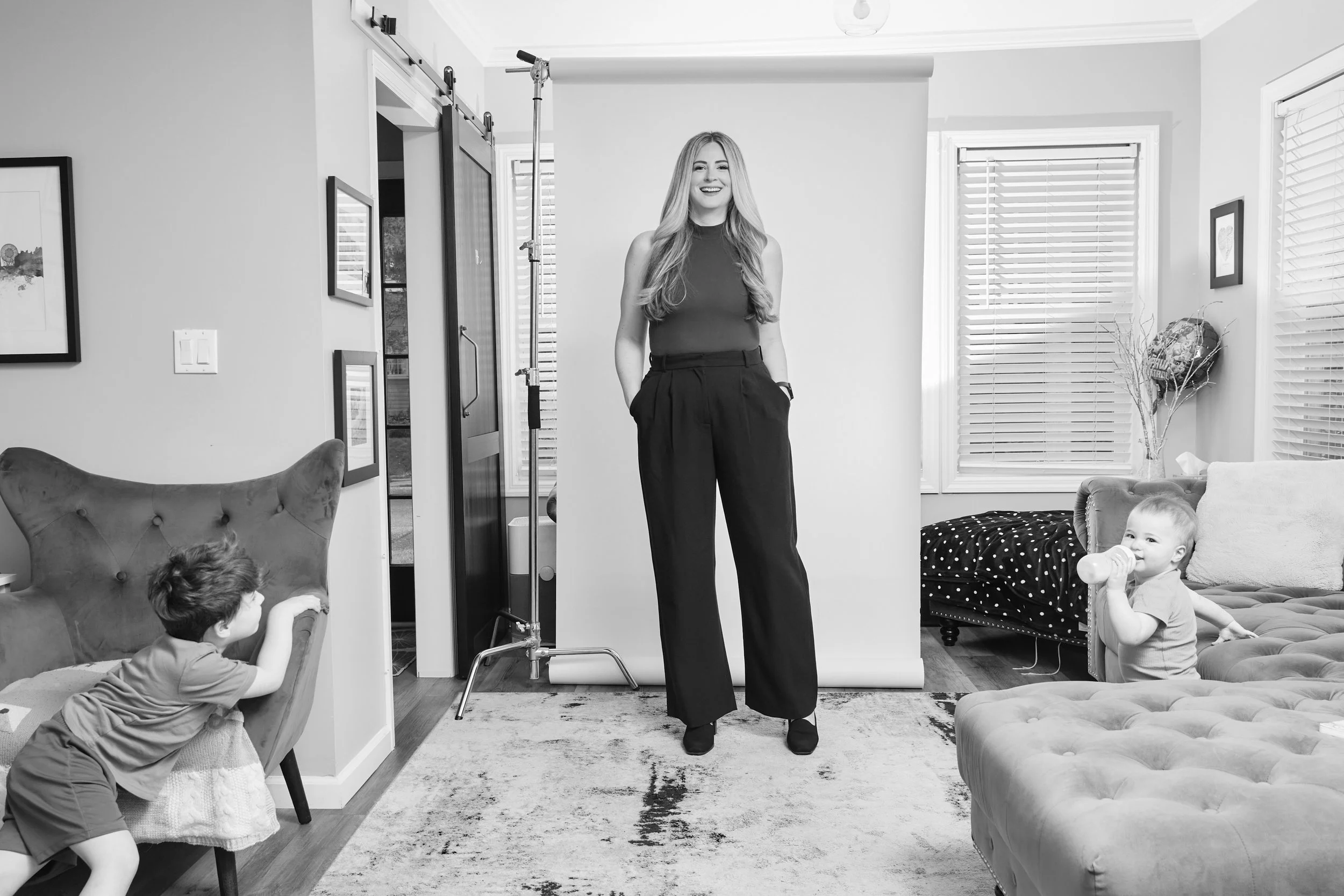
Molly is the Founder and CEO of The Mom Pact, a career driven network designed to support working mothers through some of the most complex transitions of their professional lives. She also comes from a background in strategy, operations, and M&A. She understands systems, incentives, and failure points. When she talks about working moms leaving the workforce, she is not speaking emotionally. She is speaking analytically.
Her conclusion is clear. Working moms are not opting out. They are being pushed out.
Motherhood Does Not Diminish Ambition
One of the most persistent myths in professional culture is that motherhood softens ambition. That once women have children, their desire to lead, grow, and take on responsibility naturally declines.
Molly’s experience, and the experience of the women she works with every day, directly contradicts that belief.
For many women, motherhood acts as an accelerant. It sharpens focus. It clarifies values. It forces deeper questions about impact, legacy, and leadership. Maternity leave becomes one of the few moments in a high performing woman’s career where there is space to pause and reflect. What am I building. What matters now. What kind of leader do I want to be.
Rather than returning disengaged, many women return with increased ambition and urgency. The difference is that the margin for inefficiency, misalignment, and performative work disappears.
Instead of recognizing that shift as a leadership asset, many organizations respond with subtle skepticism. Women come back to reorganized teams, new managers, or roles that quietly assume reduced availability means reduced capability. Expectations change without conversation. Pressure increases without support.
Women feel compelled to come back stronger than before, even as they navigate physical recovery, identity shifts, sleep deprivation, and caregiving responsibilities. This is not resilience. It is survival.
A Workplace Built for a Different Reality
The modern workplace is still built on an outdated assumption. That there is someone else handling life outside of work.
The traditional workday assumes uninterrupted availability. Career progression assumes linear momentum without pause. Return to office mandates assume presence equals productivity.
None of this reflects the reality of working families.
Childcare costs rival housing expenses. School schedules and holidays are incompatible with standard work hours. Illness, closures, and emergencies fall disproportionately on mothers. When flexibility disappears, something has to give.
For many women, that something is their career.
Molly is clear that this is not about convenience or preference. It is about feasibility. You cannot perform inside a system that requires you to pretend you do not have a life.
The result is predictable. Women step back, step down, or step away. Not because they lack commitment, but because the system demands tradeoffs that should never be required in the first place.
The Leadership Accountability Gap
When women leave the workforce after becoming mothers, the dominant narrative centers on choice.
Molly challenges that directly.
A choice made under constraint is not a free choice. It is an outcome of design.
If returning to work means rigid schedules, loss of flexibility, unaffordable childcare, and constant pressure to reprove value, stepping away becomes the rational option. That is not a confidence issue. It is a leadership issue.
Organizations lose experienced, capable women at the exact moment they are ready for greater leadership responsibility. That loss carries real cost. Institutional knowledge. Decision making ability. Emotional intelligence. Cultural stability.
Flexibility is often treated as a benefit. Molly reframes it as infrastructure.
Time is the most valuable resource employees have. Trust and autonomy drive performance more reliably than incremental salary increases. Companies that understand this retain talent. Companies that do not pay for it in turnover, disengagement, and stalled growth.
The irony is that many of the most effective solutions are not expensive. Hybrid work. Clear leave planning. Thoughtful reintegration. Childcare stipends. Predictable flexibility around hours.
These are not radical ideas. They are pragmatic ones.
Career Gaps Are Not a Liability
Another deeply embedded bias Molly addresses is how career gaps are perceived.
Time away from work, particularly for caregiving, is still treated as something to explain or defend. Gaps on a resume trigger assumptions about relevance, skill decay, or diminished ambition.
This thinking is outdated.
Caregiving builds skills that most leadership roles demand. Prioritization. Crisis management. Boundary setting. Communication. Emotional regulation. Decision making under pressure.
Hiring managers who understand this see career gaps as context, not risk. They recognize that many women return to work with sharper focus, clearer values, and stronger leadership instincts than before.
The problem is not the gap. The problem is the narrow lens through which value is still defined.
Community as Infrastructure
The Mom Pact exists because too many women are navigating these transitions alone.
Molly intentionally positions community not as networking, but as infrastructure. A place where women learn what is negotiable. Where they see examples of careers that bend without breaking. Where mentorship is reciprocal and grounded in reality.
Many women do not know they can negotiate beyond salary. They do not know they can ask for phased returns, flexible schedules, or alternative structures. They do not know because no one ever modeled it.
Community fills that gap. Not with encouragement alone, but with language, frameworks, and lived examples.
This matters most for women earlier in their careers, women without access to informal power, and women navigating transitions without safety nets.
From Support to Structural Change
Molly is clear that support alone is not enough.
Her long term vision includes policy reform. Paid parental leave. Protection for caregivers. Baseline standards that do not depend on employer goodwill.
Other countries have built these systems. The United States has not. The consequences are visible in workforce exits, widening pay gaps, and lost economic potential.
Change will not come from conversation alone. It requires sustained advocacy, data, and collective pressure.
Molly’s work is about scale. Not just helping individual women survive broken systems, but changing the systems themselves.
What This Conversation Demands
This episode is not only for working moms.
It is for founders, executives, and leaders who claim to care about talent, culture, and performance. It asks a simple but uncomfortable question.
If your best people are leaving, what does that say about how your system is designed.
Supporting working parents is not charity. It is leadership. It is about building organizations that reflect real life, not outdated assumptions.
As the year comes to a close, this conversation feels like a reckoning. We can keep explaining away the data. Or we can take responsibility for the structures producing it.
Molly McCartan is clear about where she stands.
Moms deserve more than survival. Leadership needs to catch up.
Connect with Molly
Website: https://www.themompact.com
Instagram: https://www.instagram.com/themompact/
Facebook: https://www.facebook.com/molly.owens/