When Growth Breaks the Business Model: Deanna Woodroffe on Direct Primary Care, Capacity, and the Cost of Volume
Growth is one of the most persuasive false positives in business. More customers, more employees, more locations, and more demand can all signal momentum while the operating model underneath becomes progressively less capable of delivering what made the company valuable in the first place. A founder can look at a fuller calendar and a larger organization and reasonably conclude that the business is succeeding, even as quality declines, employees lose capacity, and the owner spends more time feeding the machine than improving it.
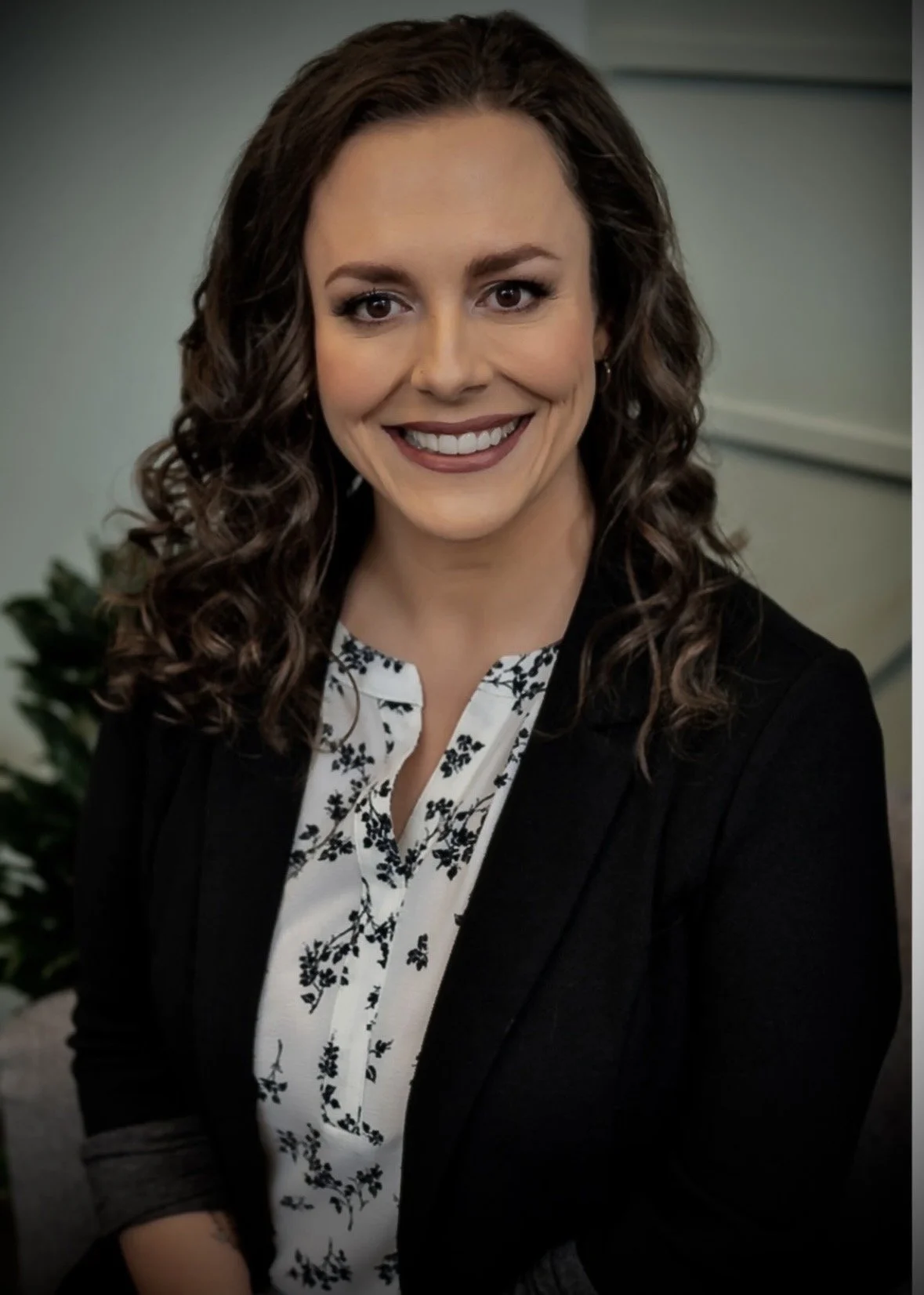
That tension sits at the center of Deanna Woodroffe's story. She did not set out to build a medical practice, much less one that would grow across two Colorado locations. Yet Vibrant Health of Colorado expanded quickly because patients wanted the kind of care she and her team provided, combining traditional medicine with functional and integrative care and spending more time investigating the causes behind chronic symptoms. Demand was real. The problem was that the economics of the model increasingly required even more growth.
Deanna is a board certified Women’s Health Nurse Practitioner who has spent nearly two decades in practice and specialized in bioidentical hormones from the beginning of her career. Before moving to Colorado, she practiced in St. Louis for 14 years, and in 2012 she completed a fellowship in anti aging and functional medicine. Her clinical philosophy was shaped partly by her own experience as a young woman whose chronic symptoms were dismissed until she found a provider willing to look more deeply. Her background and clinical work are detailed in Deanna Woodroffe’s professional biography.
But the most useful business insight in her conversation is not about medicine. It is about recognizing when growth stops being a strategy and becomes an obligation.
Demand Is Not the Same as a Healthy Business Model
Deanna became a business owner unexpectedly. She moved to Colorado to work for an OB GYN who practiced functional and integrative medicine. Less than a year later, he became ill and died unexpectedly, leaving the practice in uncertainty. Another physician encouraged Deanna to take it over and helped her navigate a transition she freely admits she did not yet know how to manage.
The practice began with two providers and eventually grew to nine across Denver and Eagle. Much of that expansion came through word of mouth. From the outside, this is the growth story founders are trained to want. Demand generated expansion. Expansion created jobs. The company added providers and reached more patients.
Inside the business, however, a different equation was taking shape. In an insurance based practice, Deanna explained, the company does not independently determine what it will be paid for much of its work. Expenses can rise while reimbursement does not move in parallel. The practical response is volume. Existing providers see more patients, or the practice hires additional providers who can see more patients.
“I didn't want to keep growing like that, but that's kind of the only way to maintain what you're doing.”
That sentence is larger than healthcare. It describes a structural problem familiar to many service businesses. If margins, pricing, delivery costs, or customer expectations make the current model viable only when the company continually adds volume, growth is no longer simply an opportunity. It becomes maintenance.
An agency can add clients because pricing has not kept pace with labor. A consulting firm can add people because every revenue increase depends on more billable hours. A founder can celebrate a larger top line while complexity and payroll absorb nearly every additional dollar.
The question is not whether demand exists. The question is whether the operating model converts demand into durable value.
Sometimes the Strategic Growth Decision Is to Serve Fewer Customers
In March 2026, Vibrant Health made the decision that changed the economics and experience of the practice. It stopped accepting insurance for visits and transitioned to a direct primary care model. Under the structure Deanna describes, patients pay an annual or monthly fee that covers their care with the practice, including primary care, gynecology, hormone therapy, weight management, urgent needs, and more complex functional medicine work.
The American Academy of Family Physicians describes direct primary care as a model in which patients pay a practice directly through periodic payments for an agreed set of primary care services. The structure can give practices more predictable recurring revenue while reducing dependence on traditional third party billing.
For Vibrant Health, the most consequential number was not the membership price. It was capacity.
The Denver and Eagle practices had been serving roughly 7,000 patients. Under the new model, Deanna said the practice would cap its patient population at approximately 1,000.
That is an extraordinary decision when viewed through the conventional language of scale. Most founders spend years trying to increase the number of customers they can serve. Deanna deliberately designed a model that could serve fewer.
The logic becomes clearer when capacity is treated as an economic asset rather than unused space. Fewer patients mean providers can spend more time understanding medical histories, researching difficult cases, responding between appointments, consulting specialists, and following questions that do not fit neatly into a short visit. The business is exchanging volume for depth.
It is also exchanging one kind of access for another. Deanna has been candid that the membership model is not right for everyone and that losing patients was one of the hardest parts of the decision. She had spent years trying to make functional and integrative care more accessible by accepting insurance. Walking away from that structure created a genuine values conflict, not simply a pricing decision. Vibrant Health addressed that tension directly in its explanation of the membership transition to patients.
This is what makes the case useful for founders. Strategic choices often involve competing goods. Accessibility matters. Quality matters. Employee capacity matters. Financial sustainability matters. Customer expectations matter. A mature decision rarely allows a leader to maximize all of them at once.
The task is to decide which constraints the business can responsibly carry and which ones are beginning to destroy the promise at its center.
Mission Does Not Eliminate Economics
Healthcare makes the tension between purpose and economics unusually visible because patients understandably experience care as something more important than a commercial transaction. Providers often feel the same way. Deanna describes medical professionals as people who entered the field because they want to take care of others, not because they were eager to study margins, payroll, reimbursement, or practice operations.
She also argues that this instinct can become dangerous when it prevents a provider from treating the business itself as something that must remain healthy.
“Ultimately, what it comes down to is you have to focus on the business first. You have to.”
Read superficially, that can sound like a contradiction for a healthcare founder. Read operationally, it is the opposite. A company cannot continue delivering mission driven work if its economics steadily weaken the people and systems required to deliver it.
Deanna had seen medical offices end up in bankruptcy earlier in her career. As an owner, she came to understand the size of the overhead behind care, including payroll, technology, rent, supplies, and the administrative infrastructure patients rarely see. Caring deeply about patients did not exempt the practice from those obligations. It made managing them more consequential.
This principle applies to any founder whose business carries a strong service mission. Purpose does not pay people. Generosity does not correct underpricing. Customer loyalty does not automatically create contribution margin. The more emotionally meaningful the work, the easier it can be for a founder to treat financial discipline as somehow opposed to the mission.
In reality, financial discipline is often what protects the mission from becoming dependent on overwork.
That is particularly important in businesses where the founder or team sells judgment, attention, creativity, expertise, or care. Those resources are not infinitely scalable. When the operating model consumes them faster than the organization can restore them, quality eventually becomes a casualty of the economics.
Capacity Is Part of the Product
Before the transition, Deanna said the practice already spent more time with many patients than is common in traditional medicine. Even then, providers were reaching the limits of what they could carry. They would see patients throughout the day, then spend additional hours responding to questions, reviewing results, researching issues, and completing work that could not fit into appointments. Primary care schedules were booking months ahead.
The problem was not that the providers stopped caring. It was that the business model had consumed the capacity required to express that care well.
“You just can't because you are doing so much and your time is so limited and you just, you don't have the bandwidth or the time to do all the things you'd like to do.”
Burnout is often framed as an individual resilience problem when it may be an operating design problem. If skilled employees repeatedly need evenings, emotional overextension, or unsustainable personal effort to deliver the promised standard, the organization has built a quality system that depends on hidden labor.
That hidden labor eventually appears in turnover, slower response times, mistakes, weaker customer relationships, reduced curiosity, or employees who remain competent but no longer have the cognitive space to do exceptional work.
Deanna describes a noticeable change after the new model took effect. She has more time to research unfamiliar treatments, consult specialists, work on the business with her practice manager, and still have capacity for her own health and family. The providers, she says, are able to practice in a way that feels more aligned with why they entered healthcare.
The same principle applies in advisory firms, creative agencies, law practices, accounting businesses, and consultancies. Capacity is not merely an HR metric. When customers are paying for thought, judgment, attention, or trust, capacity is part of the product.
A company that sells expertise but systematically exhausts its experts is degrading its own inventory.
The Strategic Question Is Not How Big You Can Get
Deanna's story complicates the standard founder narrative because she is not chasing maximum scale. She has already built a larger practice. She has added providers, opened a second location, managed a growing team, and experienced the demand that many businesses work desperately to create.
Her current question is different: What kind of company allows the work to remain worth doing?
That is a more sophisticated measure of growth because it forces the founder to evaluate the relationship among economics, capacity, customer experience, team health, and personal leadership. It asks whether the company is becoming more valuable or merely more demanding.
For serious founders, the implications are significant. Separate growth caused by opportunity from growth caused by structural weakness. If the business must continually add customers simply to absorb rising costs or compensate for weak pricing power, the founder does not have a pure growth strategy. She has an economic dependency that deserves examination.
Measure capacity before it disappears. Waiting until key employees are burned out, service quality has declined, or the founder hates the company she built is an expensive way to discover that the model needs redesign.
Recognize, too, that a smaller customer base can produce a stronger business when it creates the ability to deliver more value per relationship. The relevant metric is not always how many people the company can touch. It may be how well the company can serve the customers it deliberately chooses to retain.
Finally, leaders have to become more tolerant of decisions that make sense strategically but are unpopular emotionally. Deanna faced criticism from patients who believed leaving insurance was primarily about money. She understood why people were upset, particularly because she had spent years trying to make this kind of care accessible. But she also had to decide whether protecting everyone from disappointment was more important than protecting the long term ability of the practice to deliver its work.
That may be the most transferable part of her evolution as an owner. A founder who cannot tolerate being misunderstood will eventually allow the loudest stakeholder to become the strategist.
Vibrant Health of Colorado did not redesign its model because demand disappeared. It redesigned the model because demand had exposed the limits of the system supporting it. Serving more people was making it harder to serve people in the way Deanna believed they should be served.
That is not a rejection of growth. It is a more disciplined definition of it.
The full conversation with Deanna Woodroffe on the Badass Women in Business Podcast goes deeper into the economics of healthcare ownership, direct primary care, women advocating for better medical care, functional medicine, hormone health, and the leadership challenge of making decisions that will not satisfy everyone. Readers can learn more through Vibrant Health of Colorado, then continue exploring founder strategy and leadership through the proveHER Blogcast and the proveHER community.