Building What Tech Forgot: Rebecca Matchett, Synchrony, and the Business Case for Human Connection
Entrepreneurship is often framed as a story of disruption, but the strongest businesses rarely begin with a desire to disrupt. They begin with attention. A founder notices something others have learned to ignore. A customer need that has been treated as too niche. A market gap that keeps showing up in plain sight. A human problem that existing systems have failed to solve because those systems were never designed with that person in mind.
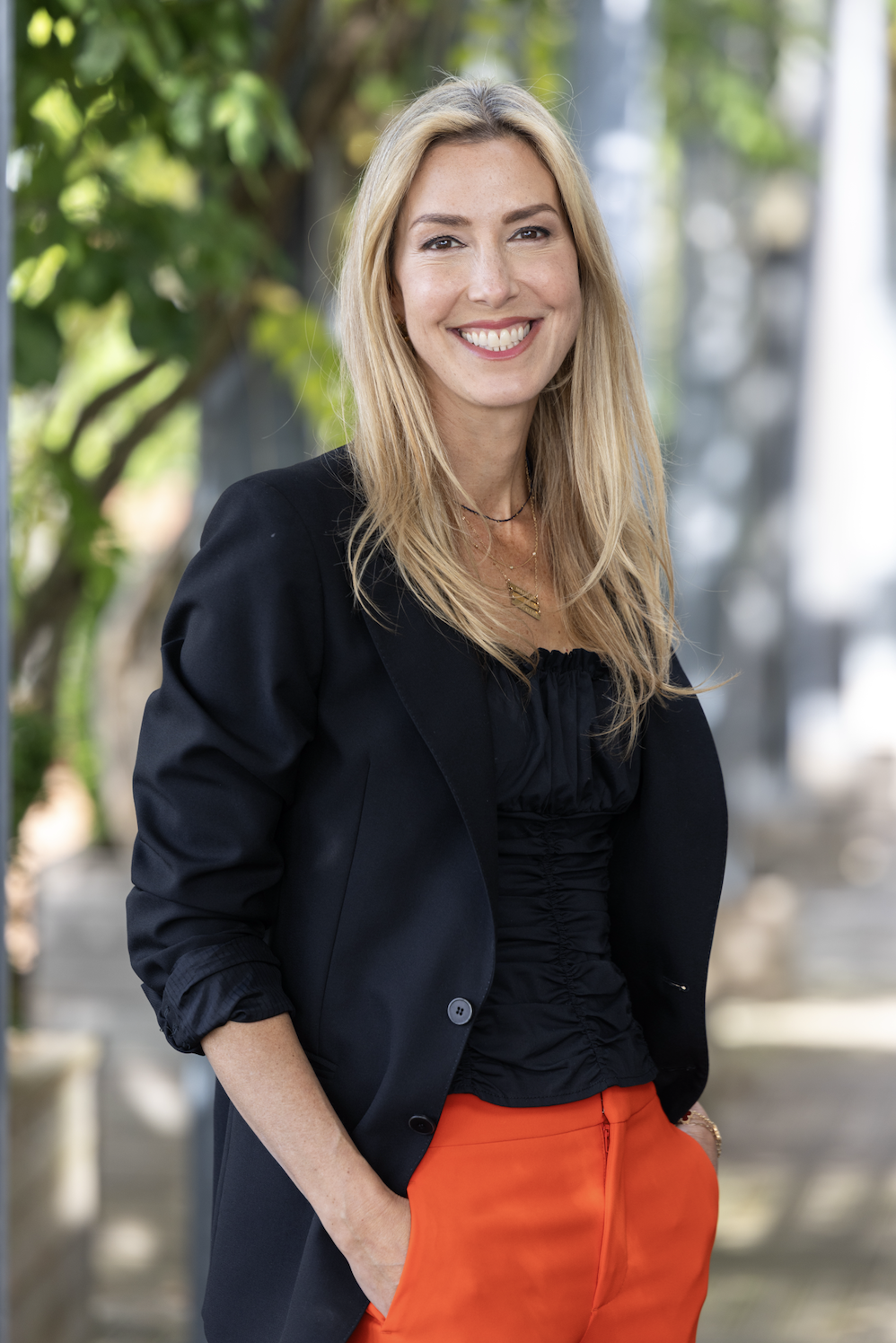
That is the thread running through Rebecca Matchett’s career.
Before co-founding Synchrony, Rebecca built and led businesses in fashion, sizing, e-commerce, and consumer products. She was part of the founding story of alice + olivia, later helped develop a patented women’s sizing system through TrioFit, and spent years learning how to take an overlooked problem and turn it into a business. Her work has often started in markets where the available options did not fully match the needs of the people using them.
But Synchrony is different.
This time, the gap is not about better fit in clothing or a more useful consumer product. It is about something much more basic and much more urgent: connection.
Synchrony is an AI-assisted social platform designed specifically for neurodivergent adults. It was created to help people build friendship, community, and confidence in a way that honors different communication styles instead of forcing everyone into the same social rules. In a world crowded with dating apps, social media platforms, and digital communities, Synchrony asks a simple but important question: What if the problem is not that people do not want to connect, but that the platforms were never built for how they communicate?
That question is bigger than one company. It should matter to every founder, investor, product leader, employer, and business owner paying attention to where markets are moving.
Because the future of business will not belong only to companies that move fast. It will belong to companies that notice who has been left out, understand why, and build with enough care to earn trust.
The Opportunity Hidden in Plain Sight
One of the most striking parts of Rebecca’s story is that she did not enter Synchrony as a tech insider. She came to it as a builder. Her background was in advertising, fashion, consumer products, licensing, and entrepreneurship. In many ways, that distance from the tech world may have been an advantage.
Rebecca has a pattern in her career. She steps into industries where she does not know everything, but she understands enough to see a problem clearly. She described this as entering spaces where her lack of inherited assumptions can become a strength. In fashion, that meant looking at women’s sizing differently. With Synchrony, it meant looking at social connection differently.
That distinction matters.
Many companies claim to be customer centered, but customer centered design often still begins with the company’s assumptions. The business decides what the customer needs, then builds a product around that idea. Synchrony’s premise is different. It starts with the recognition that many neurodivergent adults are not failing to use existing social tools. Existing social tools are failing them.
Rebecca speaks directly to this misunderstanding in the episode. The issue, as she explains, is not a lack of desire for connection. It is often a difference in processing, communication, and social navigation. Too many systems have treated neurodivergent adults as if they need to adapt to a neurotypical world, rather than asking whether the world should create better pathways for them to participate fully.
That shift from “Why aren’t people using what already exists?” to “Why doesn’t what already exists work for them?” is where strong businesses are often born.
It is also where many industries fail.
The Cost of Designing for the Average User
Most products are built for the average user. The average user moves through onboarding easily. The average user understands social cues in expected ways. The average user knows how to interpret silence, tone, humor, discomfort, and interest. The average user can tolerate the chaos of open platforms, vague profiles, inconsistent behavior, and unspoken rules.
But the average user is not everyone.
When companies design only for the average user, they often create products that work beautifully for the people already easiest to serve and poorly for those with more nuanced needs. That is not only an inclusion issue. It is a business blind spot.
Neurodivergent adults are often discussed in the context of employment, education, housing, or caregiving. Those conversations are important, but they can unintentionally narrow the lens. They can treat adults as people who need services, rather than people who also want friendship, independence, confidence, romance, fun, community, and belonging.
Rebecca points out that social well-being is too often overlooked, even though loneliness and isolation can carry real emotional consequences. In the episode, she describes the void clearly: people want and deserve connection, but many existing platforms require them to communicate in ways that may feel exhausting, confusing, or unsafe.
This is the part many businesses miss. The problem is not always demand. Sometimes demand is sitting there, unserved, because the market has not taken the time to build in a way that feels trustworthy.
Why Trust Is a Growth Strategy
For many startups, growth is treated as the top priority. More users. More downloads. More engagement. More scale. The faster the better.
Synchrony is taking a more careful path.
The platform includes identity verification and a reference check before someone can fully join the community. On a typical social app, that kind of friction might be seen as a problem. In Synchrony’s case, it is part of the product’s value. The friction is intentional because the goal is not simply to build a large community. The goal is to build a safe and authentic one.
That is a significant business choice.
Rebecca acknowledges the tension. A social platform becomes more useful as more people join. But if the wrong people join, or if members do not feel safe, the platform loses the very thing it was built to create. For Synchrony, trust is not a marketing message. It is built into the structure of the user experience.
That lesson applies far beyond this one company.
In markets where people have been underserved, overlooked, misunderstood, or exploited, trust cannot be assumed. It has to be earned. It has to show up in the product, the onboarding, the language, the customer support, the pacing, the pricing, the partnerships, and the willingness to listen when users say something is not working.
Trust also requires restraint. It means not pushing a product onto a community before you have done the work to understand that community. It means not confusing access with belonging. It means knowing the difference between building for people and building around them.
Rebecca and her team are doing something many founders say they value but few actually practice: they are allowing the needs of the community to shape the speed of the company.
That may slow growth in the short term. It may also be the reason the business has a chance to matter in the long term.
The Role of AI When the Goal Is Not Replacement, but Support
AI has become one of the loudest conversations in business. Much of that conversation focuses on automation, productivity, cost savings, and scale. Those are important use cases, but they are not the only ones.
Synchrony offers a different view of AI. Its in-app assistant, Jesse, is designed to support users during social interactions. Jesse can help someone understand a conversation, think through a response, protect their comfort, or start a conversation based on shared interests. Importantly, Jesse is not designed to take over. It is there when needed and out of the way when it is not.
That restraint is notable.
Many AI tools are built to do more, faster. Synchrony’s AI is designed to help people feel more confident in moments that can be difficult to navigate. It is not trying to replace human connection. It is trying to make human connection more accessible.
That is a powerful distinction for any leader thinking about AI.
The most meaningful AI products may not be the ones that remove humans from the process. They may be the ones that help people participate more fully in human experiences. In this case, AI becomes a bridge. It helps decode uncertainty, reduce anxiety, and support independence, without pretending that technology can or should become the relationship itself.
Rebecca also shares that the team expected Jesse to be used heavily, but early usage has been lighter than anticipated. That insight is important. Sometimes the value of a support tool is not measured only by how often it is used. Sometimes its value is the confidence people feel knowing it is there.
That is a more sophisticated way to think about product design. The feature does not have to dominate the experience to be valuable. It can create psychological safety simply by existing.
From Fashion to Technology: The Real Transferable Skill
On the surface, Rebecca’s move from fashion to technology may seem like a sharp turn. But her career reveals a much more consistent pattern. She is not moving from one unrelated industry to another. She is applying the same underlying skill to different markets.
That skill is gap recognition.
In fashion, she saw opportunities around fit, sizing, branding, and consumer experience. In Synchrony, she saw a social and technological gap that had been ignored because it required more nuance than most platforms are built to handle.
The common thread is not the product category. It is the founder’s ability to ask better questions.
Who is not being served?
What assumptions are baked into the current options?
Where are people being forced to adapt to systems that should have been designed better in the first place?
What would it look like to build from the user’s reality instead of the industry’s default?
Those questions are at the heart of strong entrepreneurship. They are also especially important for women founders and leaders, many of whom have built companies by noticing what traditional markets dismissed. Women have long had to operate inside systems that were not designed with them in mind. That experience can sharpen a founder’s ability to see other people being underserved.
That does not mean every overlooked market is easy to serve. Often, the opposite is true. These markets require more listening, more patience, more education, and more trust building. But they can also create deeper loyalty because the product is not simply convenient. It is meaningful.
The Power and Risk of Building With Partners
Rebecca’s story also offers a grounded lesson about partnership.
Across her career, she has built with co-founders and business partners. She is direct about what she learned early: unclear roles and responsibilities can create tension fast. When partners are young, excited, and moving quickly, it is easy for everyone to do everything. But over time, that overlap can become confusion, second guessing, resentment, and inefficiency.
In her current partnership, Rebecca describes a more mature model. Each partner brings different strengths. One partner brings a deeply personal connection to autism through her son, Jesse. Another brings professional expertise as an autism specialist. Rebecca brings the business experience and execution lens. The partnership works because the differences are clear and valued.
That is a useful reminder for founders. The best partnerships are not built on sameness. They are built on clarity, trust, and enough honesty to say what each person is responsible for.
A founder does not need to know everything. In fact, thinking you need to know everything can be dangerous. What matters is knowing what you bring, knowing what you do not bring, and surrounding yourself with people whose strengths fill the gaps.
For a mission-driven company, that alignment becomes even more important. When the work touches a vulnerable or underserved community, partners cannot simply share ambition. They have to share responsibility.
Why Some Problems Cannot Be Scaled Quickly
Technology often rewards speed. Investors reward growth curves. Markets reward momentum. Founders are trained to think in terms of launch, optimize, scale.
But not every problem should be approached that way.
Synchrony is operating in a space where mistakes carry emotional weight. A poorly designed feature is not just inconvenient. A weak verification process could compromise safety. A careless message could erode trust. A tone-deaf marketing strategy could alienate the very people the company wants to serve.
That means the company has to move with a different kind of discipline.
Rebecca describes the process as slow and intentional. The team spent years iterating, questioning, and refining before launch. That is not the romantic version of startup life, but it may be the necessary one. When a business is solving a human problem, especially one tied to identity, vulnerability, and belonging, speed without care can become harm.
This is where many tech companies struggle. They are excellent at solving technical problems, but less comfortable with human complexity. Human problems do not always fit neatly into a growth model. They require listening sessions, lived experience, community feedback, safeguards, and humility. They require leaders to admit what they do not know.
That kind of building is harder to pitch because it does not always sound as explosive as “move fast and scale.” But it may be far more durable.
The Bigger Market Lesson: Inclusion Is Not a Feature
One of the biggest mistakes companies make is treating inclusion as an add-on. A feature. A campaign. A statement. A page on the website.
True inclusion changes the architecture of a business.
For Synchrony, inclusion is not a message layered on top of a standard social platform. It affects the product from the ground up: the design, the onboarding, the matching process, the AI assistant, the verification steps, the language, the pacing, and the future vision.
That is why the company is worth paying attention to even for leaders outside of tech. It shows what happens when inclusion is treated as a design principle rather than a public relations strategy.
This matters because consumers are increasingly aware of whether companies actually understand them. Employees are more aware of whether workplaces are built for different styles of thinking and communicating. Families are more aware of the gaps that appear when children become adults and support systems disappear. Communities are more aware of who has been left out of mainstream innovation.
The companies that respond with surface-level inclusion will likely be ignored. The companies that respond with real design changes may find entirely new markets.
What Synchrony Reveals About the Future of Community
The need Synchrony is addressing is not limited to one platform or one audience. It points to a broader cultural shift. People are tired of large, chaotic, performative digital spaces. They are looking for smaller, safer, more intentional communities. They want to know who they are talking to. They want better moderation. They want spaces where the design supports the kind of interaction they are actually seeking.
That trend has implications for every business building community.
For years, the assumption was that bigger networks were better. More users meant more value. But the next phase of digital community may be defined less by size and more by fit. People may increasingly choose platforms where they feel understood over platforms where they are simply exposed to more people.
For neurodivergent adults, that difference can be especially important. A platform built around shared interests, verified members, communication support, and emotional safety is not just another app. It is a different philosophy of connection.
That philosophy could eventually extend beyond the consumer app. Rebecca speaks about future possibilities, including partnerships with housing networks, universities, autism centers, and employers. That vision is compelling because it recognizes that community does not live in one place. People need communication support and belonging across many parts of life.
If Synchrony can grow into those environments while staying true to its core mission, it may become more than a social platform. It may become infrastructure for belonging.
The Founder Lesson: Let the Problem Raise the Standard
Rebecca’s decision to build Synchrony came at a different stage of life and leadership. She speaks about becoming more intentional with her time, especially as a mother and as someone who has already built businesses before. The work had to matter enough to pull her in.
That is a different kind of founder energy. It is not about chasing the next shiny opportunity. It is about choosing work that clears a higher bar.
There is a lesson here for experienced entrepreneurs and leaders who are asking what comes next. The next chapter does not always have to look like the last one. The skills may transfer, but the purpose can deepen. Sometimes the most meaningful work comes when a founder stops asking, “What can I build?” and starts asking, “What is worth building now?”
Synchrony became worth building because the need was clear, the gap was real, and the potential impact extended beyond the business itself.
That kind of clarity is rare. It is also powerful.
Why This Conversation Matters for Business Owners and Leaders
The story of Synchrony is not just a story about neurodivergence, AI, or social apps. It is a case study in what happens when a founder pays attention to the space between what people need and what the market has decided to offer.
For business owners, the lesson is to look closer. The best opportunities may not be in the loudest markets. They may be in the places where customers have quietly adapted to bad options because no one has built better ones.
For corporate leaders, the lesson is to rethink inclusion as design. It is not enough to invite people into systems that do not work for them. Better leadership asks how the system itself needs to change.
For product teams, the lesson is to treat trust as part of the product. Safety, clarity, verification, feedback, and user dignity are not secondary concerns. In some markets, they are the product.
For women founders, the lesson is especially resonant. Many women build from lived observation. They see friction others normalize. They hear what customers are not saying directly. They understand that a business can be both commercially viable and deeply human.
Rebecca Matchett’s work with Synchrony is a reminder that meaningful innovation does not always begin with a breakthrough technology. Sometimes it begins with a more generous question.
Who has been expected to adapt for too long?
So What…
The world does not need another social platform built for attention. It needs better platforms built for connection.
That distinction is at the heart of Synchrony and at the heart of Rebecca Matchett’s latest chapter as an entrepreneur. After decades of building businesses, she is now helping create something that addresses a problem far deeper than product fit or market demand. She is helping build a space where neurodivergent adults can connect with more confidence, more safety, and more dignity.
That should matter to all of us.
Because connection is not a luxury. It is not a bonus. It is not something only certain people need or deserve. It is part of being human.
And the businesses that understand that may be the ones that define the next era of innovation.