From Agency Founder to Advocate: How Natasha Golinsky Learned That the Hardest Work in Business Is Often Internal
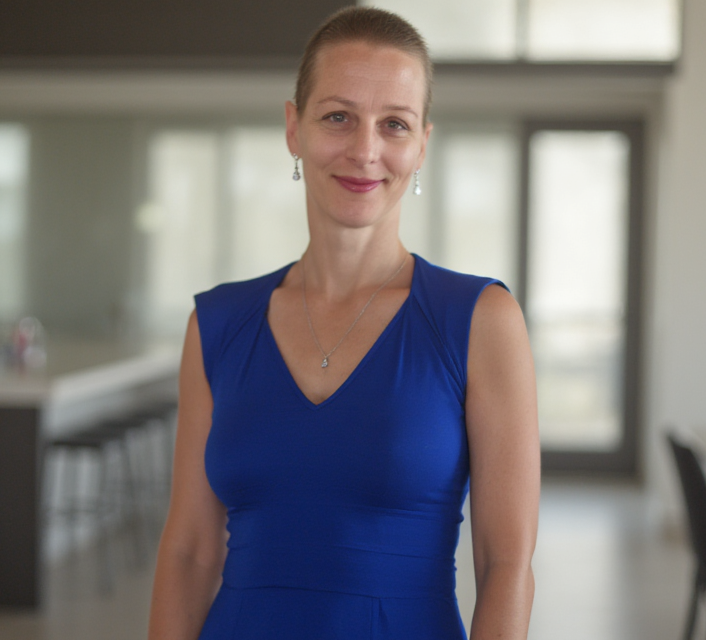
Listen Here
Entrepreneurship is often described as a journey of building. Building a company, building a team, building revenue, building a reputation in the market.
But for many founders, the most difficult work happens beneath the surface. It involves confronting the patterns, beliefs, and experiences that shape how they lead, how they negotiate, and how they show up in their business.
For Natasha Golinsky, founder of On Purpose Projects, those realizations came not through a single breakthrough moment but through years of experience, personal reflection, and eventually a life event that forced her to step back from the business she had spent more than a decade building.
What began as a story about entrepreneurship ultimately became something deeper. It became a story about resilience, self-awareness, and the kind of leadership that emerges when founders learn to let go of control and trust the systems and people they have built.
Today Natasha leads a successful custom web and e-commerce development agency based in Vancouver, Canada. She is also a three-time Canada Women of Influence nominee, a mother of three teenagers, and a breast cancer survivor.
Her journey offers a powerful reminder that building a business is rarely just about the market opportunity. It is also about the personal growth required to sustain it.
An Entrepreneurial Mindset from the Start
For Natasha, entrepreneurship never felt like a career choice that appeared later in life. It was something she gravitated toward naturally from an early age.
As a child she was constantly looking for ways to earn money and take on responsibility. One of her earliest entrepreneurial moments happened at a craft fair where her mother had a booth selling products. When her mother stepped away briefly and left Natasha in charge, she returned to find that everything had been sold.
The experience revealed something important. Natasha had a natural ability to connect with people, communicate value, and close a sale.
Those instincts would later play a major role in how she built her company, even though the industry she eventually entered was far removed from traditional sales environments.
Over time she discovered that entrepreneurship allowed her to combine independence, problem solving, and communication in ways that traditional employment rarely offered.
Building a Web Development Agency by Solving a Client Problem
Before launching On Purpose Projects, Natasha worked as a management consultant in the nonprofit sector. The agency she runs today actually began with a simple client request.
A client asked if she could help find someone to build a website.
Natasha agreed and hired a developer through an online freelance platform. She coordinated the project and delivered the finished work to the client. The process went smoothly, and soon another client asked for the same type of help.
What started as a one-off project quickly turned into a recurring service. Over time Natasha realized that there was an opportunity to build a company around coordinating and delivering complex web development projects for organizations that needed reliable technical support.
More than a decade later, that simple request has grown into a fully developed agency specializing in custom web and e-commerce development.
There is one detail that makes Natasha’s story particularly unusual.
She has never built a website herself.
Instead of focusing on the technical side of the work, she focused on assembling the right team and creating the structure that allowed talented developers and designers to do their best work. Her role became one of leadership, strategy, and client relationships rather than technical execution.
The Early Challenges That Service Businesses Often Face
Like many founders in the service industry, Natasha quickly discovered that having clients does not automatically translate into having a profitable business.
The agency was busy. Projects were coming in regularly. The team was growing.
Yet despite the constant activity, the financial results were not reflecting the effort being invested.
The issue eventually became clear. The business was struggling with scope creep and unclear boundaries.
Clients frequently requested additional work outside the original agreement. Natasha, wanting to maintain strong relationships and avoid conflict, often agreed to accommodate those requests.
Over time this pattern created a situation where the company was working harder without being compensated appropriately for the extra effort.
Recognizing the problem was the first step toward fixing it. Natasha began studying how to properly scope projects, establish clear expectations with clients, and price work in a way that reflected the true value of the services being delivered.
The results were immediate. Within a year she was able to pay herself a six-figure owner draw from the agency.
The shift demonstrated an important lesson that many founders learn over time: profitability often depends less on how much work a company performs and more on how that work is structured and communicated.
Understanding the Personal Patterns That Shape Business Decisions
As Natasha began refining the business model of her agency, she also started reflecting on the deeper reasons why certain challenges had been difficult to address in the first place.
Many of the struggles around pricing and boundaries were not simply strategic issues. They were connected to personal patterns developed long before she became an entrepreneur.
Growing up in a household shaped by strong emotional dynamics had taught her to prioritize harmony and avoid conflict. Those instincts helped her navigate family life, but they later showed up in her business as a reluctance to enforce boundaries with clients.
This realization led Natasha to begin exploring the connection between personal history and leadership behavior.
Over time she developed a growing interest in the role that mindset, trauma, and emotional regulation play in entrepreneurship. The more she learned, the more she saw similar patterns among other founders who struggled with pricing, negotiation, or delegation despite having strong technical or strategic skills.
The insight would later shape the direction of her work beyond the agency itself.
When Life Forces a Founder to Step Back
In September 2024 Natasha received a diagnosis that would dramatically change her daily life.
She had stage two breast cancer.
Treatment required surgery, chemotherapy, and a long recovery period. Continuing to run the agency in the same hands-on way was no longer realistic.
For many entrepreneurs, the idea of stepping away from the company they built can feel almost impossible. The business often becomes deeply tied to their identity and daily routine.
Natasha knew she needed to find someone who could take over operational leadership during treatment.
Fortunately, the right person was already in her professional network. A former client who had worked closely with the agency agreed to step into the role.
The onboarding process was far from ideal. Many of the early training sessions happened while Natasha was recovering from surgery or going through chemotherapy treatments. Yet the new leader quickly learned the systems and began managing the team and client relationships.
The transition was not always smooth. Mistakes were made, and some clients were lost along the way. But the company continued operating and the team remained intact.
Learning the Difficult Skill of Letting Go
When Natasha returned from treatment, she faced a decision that many founders struggle with.
Should she resume full operational control of the business, or allow the new leadership structure to continue?
Ultimately she chose to step back and allow the person she had brought in to keep running the agency.
The decision required a significant shift in mindset. Watching someone else lead the company meant accepting that things would sometimes be done differently than she would have done them herself.
It also meant accepting that mistakes are an inevitable part of growth for any leader.
Over time Natasha realized that leadership is not only about making the right decisions. It is also about creating the space for others to develop their own leadership capacity.
The experience reinforced an idea that many entrepreneurs eventually confront: building a sustainable company often requires founders to relinquish control rather than hold on to it indefinitely.
A New Direction Focused on Mental Health and Entrepreneurial Growth
With the agency operating successfully under its new structure, Natasha found herself with time and perspective to think about what she wanted to do next.
The experience of navigating illness, leadership transitions, and years of personal development had clarified something she had long been interested in exploring.
She wanted to help other entrepreneurs understand the emotional and psychological dynamics that influence business success.
Many founders spend years trying to solve operational problems without realizing that deeper beliefs about money, worth, conflict, or authority may be influencing their decisions.
Natasha began exploring trauma-informed coaching and developing ideas for content and programs that address these challenges directly.
Her goal is to help entrepreneurs expand their comfort zones, build healthier relationships with work, and develop businesses that support their lives rather than consume them.
Redefining What Success Looks Like
Today Natasha’s role inside her company looks very different from the early years when she managed every aspect of operations.
She now focuses on high-level strategy and business development while the team handles the day-to-day work. The shift has created space for both personal recovery and new professional exploration.
Looking back on the journey, Natasha often reflects on how much entrepreneurship has shaped her understanding of leadership and personal growth.
The experience has reinforced a simple but powerful idea.
Building a business is rarely just about the product or service being offered. It is also about the person building it.
For many founders, the most important transformation does not happen inside the company.
It happens within themselves.