The Nonlinear Career Path That Creates the Biggest Opportunities
There is a version of success that looks right on paper.
It follows a clear path, builds on logical steps, and offers a sense of predictability that is easy to explain to others. For many high-achieving women, that path is not just encouraged, it is expected.
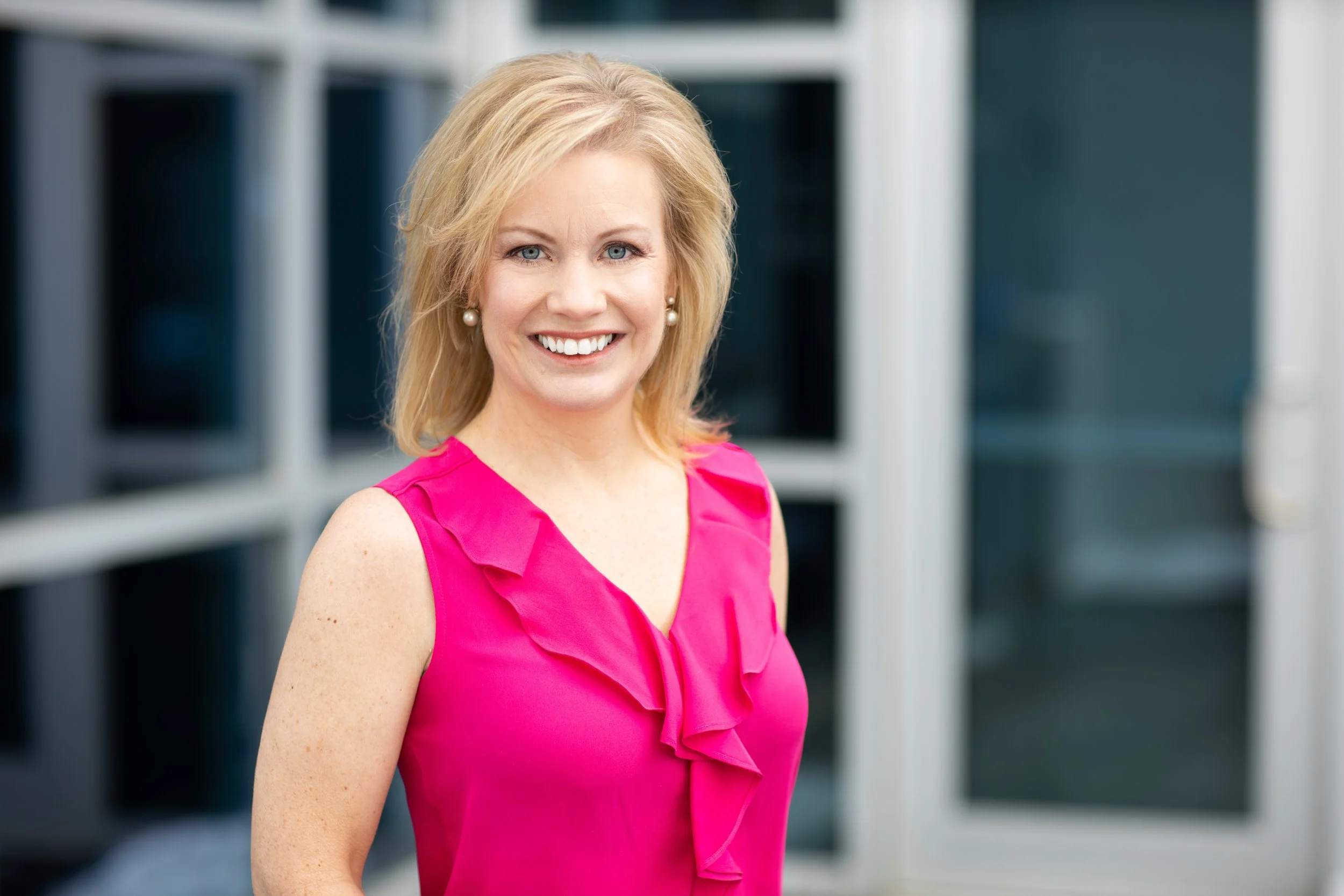
Melissa Anderson had that option in front of her.
At the end of college, she was choosing between a journalism role aligned with her degree and a competitive path in Taekwondo that could have led to Olympic training. Both opportunities were credible, structured, and would have positioned her well by conventional standards.
She chose neither.
Instead, she moved to Ireland without a job and without a defined plan, making a decision that did not fit into a traditional framework but ultimately shaped the trajectory of her entire career.
Why Expansion Can Be More Strategic Than Certainty
What distinguishes Melissa’s approach is not a disregard for risk, but a different way of evaluating it.
Rather than prioritizing certainty, she consistently chose opportunities that offered broader exposure, more learning, and greater long-term potential. The decision to move abroad was not about avoiding structure, it was about expanding it. It created space for experiences that would not have been accessible within a more conventional path.
That early decision set a pattern.
While in Ireland, she joined a small startup that would eventually scale into a global operation with offices around the world. What began as an unstructured move became a formative experience in building, scaling, and operating in environments where there was no clear roadmap.
Instead of following a predefined career ladder, Melissa developed a practice of identifying where the most meaningful opportunity existed and positioning herself there, even when outcomes were not fully defined.
Rethinking Risk in a Modern Career
From the outside, Melissa’s career appears to be built on high-risk decisions. She has spent much of her time in early-stage companies, developing new products, entering emerging markets, and operating in spaces without established playbooks.
However, her experience challenges the assumption that these choices are inherently less stable.
She has never lost a role or been laid off. In contrast, many professionals in traditional corporate environments, often perceived as more secure, have faced instability due to factors beyond their control. This contrast highlights a critical point. Risk is not determined solely by familiarity or structure. It is shaped by adaptability, ownership, and the ability to create value in changing environments.
In that context, what appears to be a safer path may, in practice, offer less control over long-term outcomes.
Building in White Space Where No Playbook Exists
A consistent theme throughout Melissa’s career is her ability to operate in undefined markets.
After returning to the United States, she joined Sittercity and identified an opportunity that extended beyond its original model. By building an employer-sponsored childcare solution, she helped transform the platform into a scalable business that served major corporations and government entities, including the Department of Defense. The result was a solution that supported millions of military families while creating measurable business impact.
She later brought that same mindset to Public Good, where she helped evolve the company into a platform that connected media, brands, and social impact in a new way. By enabling consumers to take action directly within content, the company created a model that aligned engagement with purpose while driving meaningful outcomes for brands.
That work ultimately led to acquisition, but as with many high-growth journeys, the path to that outcome was not linear.
When Strategy Is Not Enough
Before successfully completing the acquisition, Melissa experienced a deal that was nearly finalized but fell apart in the final stages.
The breakdown was not driven by financial or operational misalignment. It came down to trust.
The experience underscored how much human dynamics influence business outcomes, particularly in complex transactions. Communication, tone, and perception can shift alignment quickly, even when the underlying strategy is sound.
In the next acquisition process, Melissa approached the situation differently. She prioritized direct communication, maintained close alignment with the acquiring team, and focused on preserving trust throughout the process. That shift proved to be a defining factor in bringing the deal to completion.
Leading at the Intersection of AI, Media, and Monetization
Today, Melissa serves as President of Public Good and leads the launch of Search.com, a platform designed to fundamentally reshape the economics of AI-driven search.
Search.com introduces a model that challenges traditional assumptions about how value is created and distributed across the digital ecosystem. Instead of extracting value from one group to benefit another, the platform is structured to align incentives across consumers, publishers, and brands.
For consumers, the platform is free to use, removing barriers to access while introducing a cashback model that allows users to earn from their engagement. This approach redefines the relationship between users and AI, shifting from a pay-to-access model to one that creates direct value.
For publishers, Search.com reverses the traditional economics of search by turning what has historically been a cost center into a revenue-generating opportunity. Through attribution and revenue sharing, publishers are compensated for their content, addressing long-standing concerns around content scraping and monetization.
For brands, the platform creates a more effective way to engage consumers by placing them within what Melissa describes as “moments of motivation,” where attention is focused and context is relevant. In a digital environment often defined by clutter, this model offers a more direct and meaningful connection.
At its core, the platform reflects a broader philosophy that has defined Melissa’s career: building systems that create value across all participants rather than optimizing for a single outcome.
How Perspective Shapes Confidence Over Time
While Melissa’s career reflects a high level of confidence, she is clear that it was not something she started with.
Early decisions were driven more by curiosity and a willingness to explore than by certainty. Over time, as patterns emerged and experiences accumulated, that curiosity evolved into trust. Not a belief that outcomes would always be predictable, but a confidence in her ability to navigate whatever unfolded.
This perspective is reinforced by a broader mindset that emphasizes opportunity over limitation. By focusing on what can be built, learned, or created in any given situation, she has been able to approach challenges with a level of clarity that supports better decision-making.
The Overlooked Driver of Performance
Despite her experience in building companies and leading innovation, Melissa identifies a different factor as one of the most significant influences on her success.
She points to the moments when things did not go well, in business, in leadership, or in her personal life, and notes a consistent pattern. In those moments, she was not grounded or centered.
This insight shifts the conversation from external strategy to internal state.
The ability to make effective decisions is not only dependent on experience or intelligence. It is also influenced by clarity, presence, and the ability to remain connected to one’s own perspective in complex situations.
Why Self-Prioritization Is Not Optional
For many women, the tendency to prioritize others is deeply ingrained.
Responsibilities to teams, families, and organizations often take precedence, with personal needs addressed only when time allows. Melissa challenges this approach by reframing self-prioritization as essential to effective leadership.
Maintaining clarity, making aligned decisions, and leading others all require a level of internal stability that cannot be sustained if personal well-being is consistently deprioritized. This is not about surface-level self-care, but about creating the conditions necessary for sustained performance.
When individuals are grounded and connected to themselves, they are less likely to make reactive decisions or overlook critical information. The impact of that clarity extends beyond the individual to every aspect of their work and leadership.
Creating Space for Clarity in a High-Demand Environment
One of the simplest practices Melissa emphasizes is also one of the most difficult to maintain.
Creating intentional space to sit without distraction, even for a short period of time, allows for a level of reflection that is often lost in fast-paced environments. While the concept is straightforward, the discipline required to maintain it is significant.
However, the value lies in its impact.
When there is space to think clearly, patterns become easier to identify, decisions become more aligned, and intuition becomes more accessible. In environments where complexity is constant, that clarity becomes a competitive advantage.
A Different Model of Success
Melissa Anderson’s career does not follow a traditional model, and that is precisely what makes it relevant.
Rather than optimizing for predictability, she has consistently optimized for expansion. Rather than avoiding uncertainty, she has developed the ability to operate within it. Rather than following established paths, she has built new ones.
Underlying all of these decisions is a consistent principle.
When you are grounded, you see more clearly. When you see more clearly, you make better decisions. And when you make better decisions, you create opportunities that would otherwise be missed.
In a business environment defined by rapid change and increasing complexity, that combination may be one of the most valuable advantages a leader can develop.