When One Woman Thrives, Communities Rise with Shannon Fernando
When One Woman Thrives, Communities Rise: Why Most Conversations About Impact Miss the Point
There is a comfortable version of impact that people like to talk about, the kind that fits neatly into panels, reports, and social posts, and then there is the version that happens in places where there is no audience, no spotlight, and no guarantee that the work will succeed.
Most people never see that version.
Shannon Fernando does.
As the Founder and CEO of Alabaster International, and a family nurse practitioner by training, Shannon has spent nearly two decades working in some of the most underserved regions in the world, partnering with communities across Kenya, South Sudan, and Ethiopia to expand healthcare access, build sustainable food systems, and create real economic opportunity for women.
Her work moves between two extremes, from high level conversations with funders and global organizations to standing in remote villages that require multiple flights and helicopter rides to reach. That proximity to both decision making and lived reality has given her a perspective most people never develop.
And it challenges almost everything we think we know about impact.
The Moment That Looked Like Failure Was Actually Direction
Before Alabaster International existed, before the recognition, the partnerships, and the global reach, there was a moment that could have ended Shannon’s path entirely.
After graduating from UCLA, she applied to medical school and was rejected by all 13 programs.
For many, that kind of rejection becomes a stopping point. It is easy to interpret it as a sign to move on or lower expectations. Shannon did something different. Instead of asking what went wrong, she asked a more difficult question about purpose.
Why healthcare, and who was she actually meant to serve?
That question led her to Kenya, where she chose to immerse herself in community life rather than observe it from a distance. Living and working in Kibera, one of the largest informal settlements in Africa, she gained a level of understanding that cannot be taught in classrooms or developed through short term exposure.
What she saw there reshaped her thinking.
The women she met were not lacking ambition, intelligence, or work ethic. What they lacked was access. Access to healthcare, access to capital, access to systems that would allow their efforts to translate into sustainable outcomes.
That realization became the foundation for Alabaster International, which began as a mobile clinic and has since evolved into a multi layered organization focused on healthcare, food security, entrepreneurship, and education.
Through the Alabaster International Network, Shannon has built a system of trusted, community led partners who co design and co implement every initiative, ensuring that solutions are not imported, but built from within.
The Problem Is Not a Lack of Solutions, It Is a Lack of Access
One of the most damaging assumptions in global impact work is the idea that underserved communities need outside solutions to be “fixed.”
It is an assumption that leads to programs that look effective on paper but fail to create lasting change.
Shannon’s work exposes a different reality.
The communities she partners with are already filled with ideas, resourcefulness, and leadership. The issue is not a lack of solutions, it is a lack of access to the resources that allow those solutions to grow.
That is why Alabaster does not lead with pre built programs. They lead with listening, collaboration, and a commitment to local ownership. Every initiative is shaped by the people it is meant to serve, which means it is more relevant, more effective, and far more sustainable.
This approach requires patience and restraint, but it also produces results that extend beyond the lifespan of any single intervention.
Why Women Are the Multiplier, Not the Target
In every community Shannon works in, one pattern is consistent and impossible to ignore.
Women are the ones holding everything together.
They are responsible for feeding families, raising children, maintaining households, and often generating income in environments where resources are limited and conditions are unpredictable. When women gain access to tools and opportunities, the impact does not remain individual.
It multiplies.
Women reinvest the majority of their income back into their families and communities, strengthening not just their own position, but the stability of everyone around them.
At Alabaster, this is not treated as a supporting insight, it is the core of the model.
Women are not positioned as beneficiaries. They are positioned as leaders. Whether they are launching businesses, forming cooperatives, or leading agricultural innovation, they are driving the outcomes that ultimately reshape their communities.
Fighting Hunger Requires More Than Short Term Relief
Hunger is often addressed through urgency, and while that urgency is necessary, it can lead to solutions that prioritize speed over sustainability.
Food aid is critical in moments of crisis, but it does not solve the underlying issue of food insecurity.
Shannon’s work focuses on a different approach, one that is rooted in long term resilience.
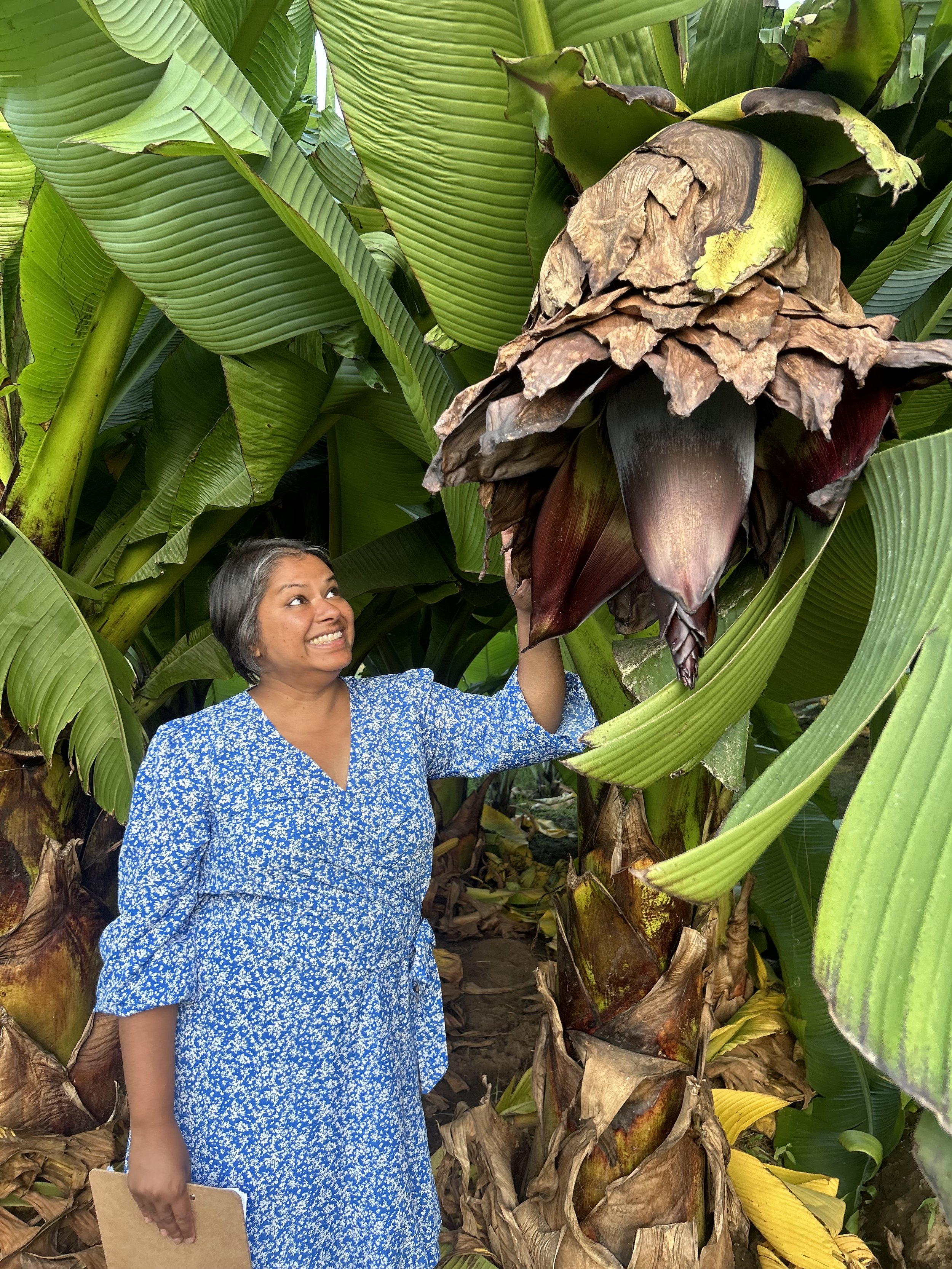
By supporting women farmers and investing in indigenous, climate resilient crops such as Enset, Alabaster is helping communities build food systems that are not dependent on external aid. These efforts are strengthened through partnerships with local institutions and global initiatives, creating a bridge between traditional knowledge and modern support systems.
This approach has earned global recognition, including participation in the U.S. State Department’s Vision for Adapted Crops and Soils program and acknowledgment from the Food Planet Prize.
More importantly, it is creating outcomes that communities can sustain on their own.
Leading Between Boardrooms and the Field
One of the most complex aspects of Shannon’s role is operating between two very different realities.
In one, she is in conversations with donors, institutions, and global organizations that require data, accountability, and measurable results. In the other, she is on the ground in communities where progress is shaped by variables that cannot always be quantified.
Maintaining alignment between those worlds requires more than strategy.
It requires discipline, clarity, and a strong commitment to ensuring that funding decisions never override the actual needs of the communities being served.
Her ability to navigate that tension has earned her recognition, including the Humanitarian Award from the Taste Awards and her role as a Commitment Maker with the Clinton Global Initiative, but more importantly, it has allowed her to protect the integrity of the work.
The Part of the Work That Stays With You
There is a weight to this kind of work that does not show up in reports or recognition.
When you are working in environments shaped by poverty, conflict, and uncertainty, the outcomes are not always guaranteed. Progress can be slow, and setbacks are part of the reality.
What sustains the work is not scale.
It is significance.
It is the child who survives, the woman who builds a business, the family that no longer has to choose between food and survival. These moments do not make headlines, but they are the reason the work continues.
Hope, in this context, is not passive. It is a decision that has to be made repeatedly.
What This Means for Women in Business
It is easy to separate global challenges from the day to day reality of running a business.
Shannon challenges that separation in a way that is both simple and difficult to ignore.
When one woman thrives, the impact does not stop with her.
It expands across families, communities, and systems. That reality creates an opportunity for women in business to think differently about how they use their resources, their networks, and their influence.
Supporting organizations like Alabaster International is one way to participate in that impact, but it is not the only way. Sharing knowledge, investing intentionally, and choosing to engage with purpose all contribute to a broader ecosystem of change.
A More Accurate Definition of Impact
Impact is not something that can be delivered from the outside.
It is built through trust, through partnership, and through a willingness to step back and allow local leadership to take the lead.
Shannon Fernando’s work is a reflection of that truth.
It shows that when solutions are built with communities instead of for them, and when women are positioned as leaders instead of recipients, the results extend far beyond what any single organization could achieve.
Because when one woman thrives, it never stops with her.
And that is where real impact begins.